




to QRZ
Latest Awards




Trials & Errors #68 (11/04/25): The Value of YouTube vs. In-Person Elmers
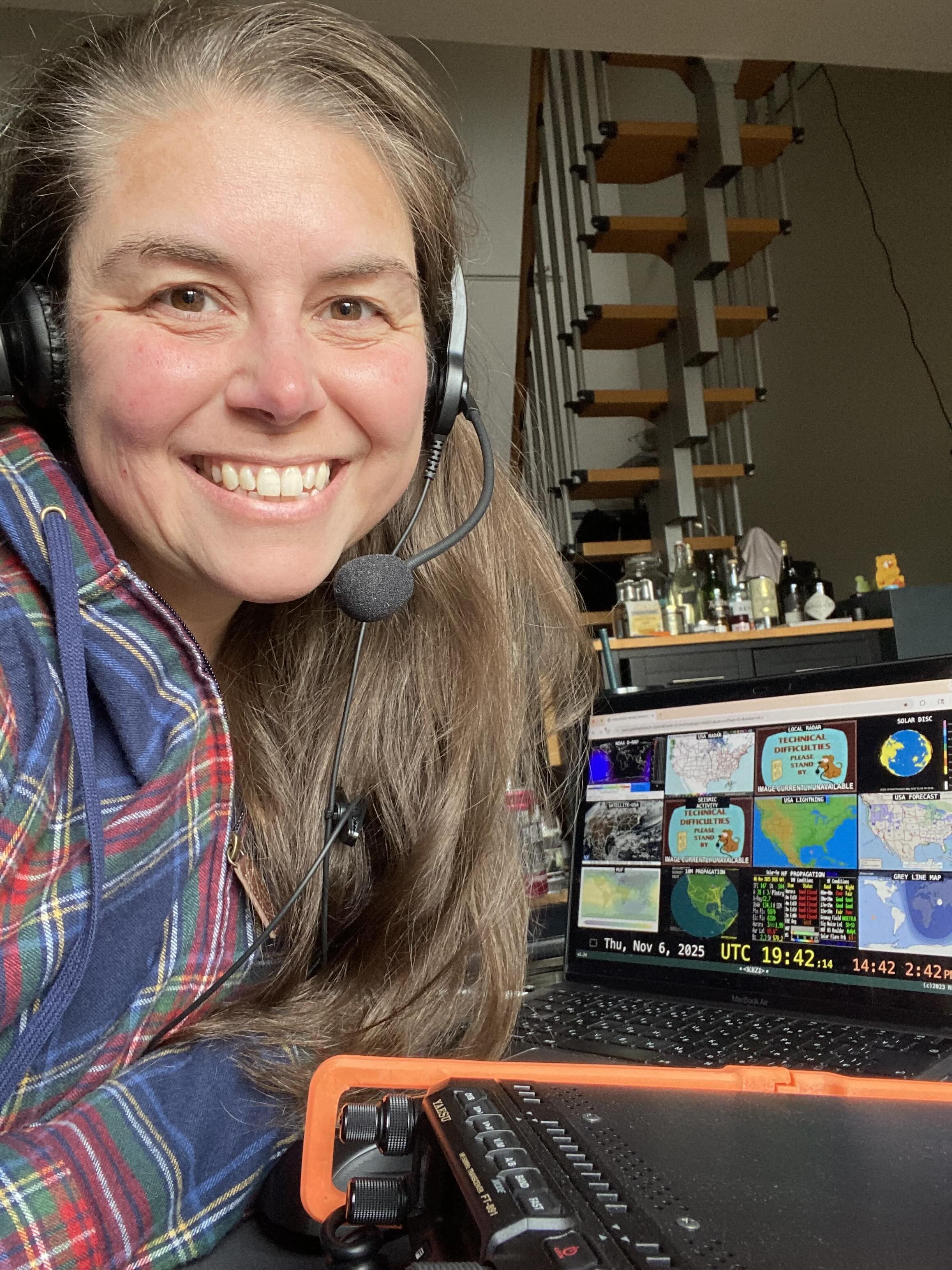
The other day I spotted a nice QRZ profile from a YL in Chicago and dropped her a note to ask for her thoughts on article topics. (I ask everyone this -- probably to the point of frustration for many of my contacts). Ingrid [K8ZI] suggested a great question . . . She asks, "Does 'Elmering' still makes sense in the age of YouTube? Has that content put an end to this need for personal connections?" (That's Ingrid in photo).
 When this question comes up we refer immediately to our own experience. My Elmer exposure in the early ham years remains critical to my knowledge base today. While I've mentioned in T&E how two mentors at the VA Hospital radio shack brought me in, I've never mentioned how important Elmer experiences have been later in my ham life.
I was putting my first Arizona ham shack in during COVID when I ran into a physical issue. We have a phenomenon here in our state where our soil becomes 'caliche' or almost like concrete.
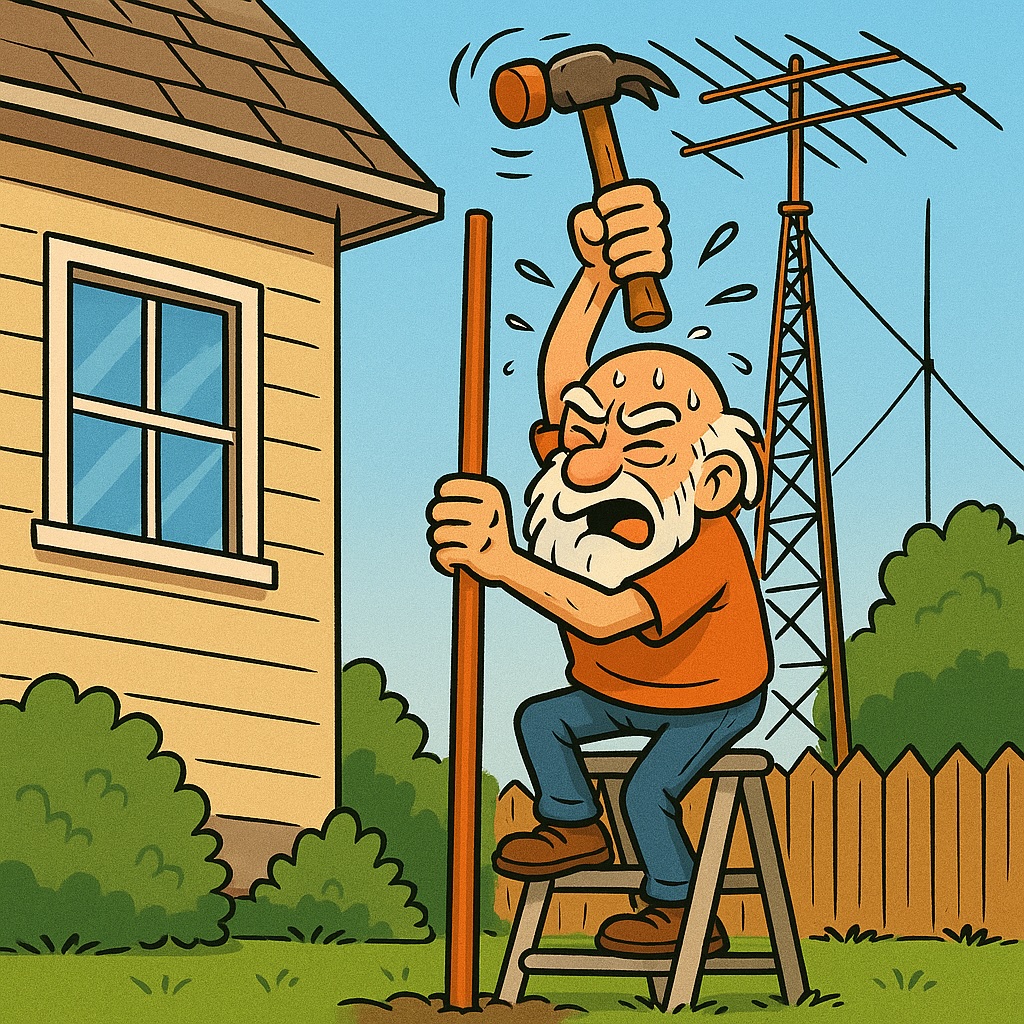
My earlier stations were in Ohio and you can just lean on a copper ground rod -- a few minutes later you've gone eight feet into the dirt. But in Arizona, my neighbors watched in astonishment as an old man (me) began swearing and beating on a copper stake from the top of a ladder -- it must have been quite a sight. It moved about a quarter inch for every ten blows and I was soon exhausted. Having nowhere else to turn, I looked up a local ham radio club and called one of their officers out of the blue (who didn't know me from Adam).
"My God, man, you won't get anywhere that way. Come on over and I'll let you borrow my fence post driver. That's the only way you'll get it done here," he replied. As always, I heard that friendly tone that good mentors are known for. It's a requirement for anyone who would ever get labeled an "Elmer."
 The YouTube Conundrum
When I first starting writing these essays on QRZ.com, it was suggested that the print format could be a bit outdated due to all the YouTube ham channels. As a result, my work got labeled as the "No YouTube Column." That's fine, but I've enjoyed good amateur radio videos as much as anyone! As a friend of mine put it, they can be a huge value to our community when amateur radio enthusiasts put the stamp of approval on them.
My friend said, "I can see lots of validity in YouTube video presenters as Elmers but only those that have been vetted by the community. Dave Casler, Jeff Tranter, W2AEW, K9VBR, Mr. Carlson's Lab, and so on. These all have a significant history and have been viewed by the harshest of critics without a negative word spoken." I totally agree with this fellow. In fact, YouTube videos have helped me out on many projects around my home, from plumbing to tile installation. I'm absolutely sure of their value -- at times. While everyone can make a mistake in teaching others, as I have, some channels have zero focus on quality control.
In this conundrum, the viewer has to make the determination as regards to the value and accuracy of what he or she is listening to. Too often I have been disappointed by material that supported a product purchase; I have also caught some very inaccurate comments being made that could lead a newcomer to a dead end. Most frustratingly, I keep getting snagged by acquiring small and inexpensive gadgets from one YouTuber's Amazon links -- only to find the darn thing defective a week past my return date.
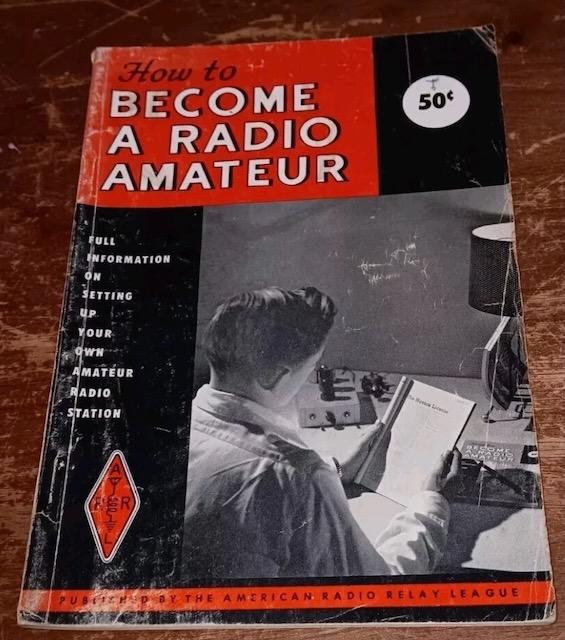 N2EY (Jim) sums the problem up well here: "The best thing about the internet is that anybody can post anything they want without having to get approval from anyone, and of course, the worst thing about the internet is that anybody can post anything they want without having to get approval from anyone." Jim also reminded me that for decades, the main sources of self-education were books, magazines, manuals, and similar printed materials. There were also Morse code records and tapes and listening on-the-air.
I learned a great deal from one ARRL publication that I carried with me for weeks. Still, it took personal interactions to make much of those learnings "real."
Money and Free Goods Provide Lubrication
A part of the reason for this difficulty in trusting social media lies with (as is often the case), money. I'm not going to go so far as to say it's the root of all evil, but it's certainly at the root of the trouble with YouTube videos. In one of my approaches to a company to secure a product to use in an article, I asked if they might sell one to QRZ.com at a bit of a discount so that I could fit it into the budget for my column (a modest one to say the least). I was surprised when I received a legal document back in reply, with the offer to receive that item and future products without any cost at all under the terms of their "Influencer Agreement." It turns out to be a common approach. While I was able to adapt their language to suit our situation (and buy the gear at a discount) it left my jaw hanging open just thinking about all the goodies that might be available if we went the "influencer" route instead of taking the "journalism" approach.
Still, it's probably not journalistic purity to even ask for a discount. While I've had my share of free stuff sent to me and very much appreciate the positive thoughts that went along with those often-unsolicited arrivals, there was no promise of a positive review. It was always a back-and-forth exchange which would benefit the supplier (and my readers) when I uncovered an issue that could be a problem for users. This is likely the same approach that the better video presenters use. An even more unblemished approach, I expect, would be when the ARRL pays full retail price before a product gets reviewed in QST. They can afford it!
Facebook, Google Groups and More Social Media
A couple of months ago I jumped into a Facebook group which supposedly supported the practice of POTA. My thought was that a prototype in my possession at that time would be a great topic of interest to the subscribers, and I posted a message about this small, portable amplifier that would take a radio putting out 5W and bring it up to the 600 watts range. While not every POTA purist is interested in that kind of power (or the larger batteries that go with it) there's a marketplace for such a device and I avoided links and stuck closely to their rules. And yet, my post was deleted because, in the eyes of the few administrators, "No one is interested in what is clearly a non-FCC approved product." Despite my reference back to the FCC's testing and approval, they deleted my string of replies to the hams who had expressed an interest.
 Have you ever noticed how small groups of people (like your HOA, perhaps . . . or an interest group on Facebook) get very power hungry when they are "in charge"? That's what happened here. Instead of a free discourse on the topic of power amps for POTA activations, two or three people thought that it was not a subject to be discussed.
My friend Ron [WB9YZU] puts it this way: "I would advise new Hams to stay away from Facebook Ham Groups. From my experience, they are not the best source for accurate information. To me, those groups give off a "lord of the flies" vibe where beginners are learning from people with very little actual experience." Ron was speaking not about the POTA group, but about one that has an "Elmer" reference in its title. Personally, I am more likely to read sites (like QRZ, or eHam) where the "advice" can be traced back to a real person and call letters.
What is the Single Best Type of YouTube Video?
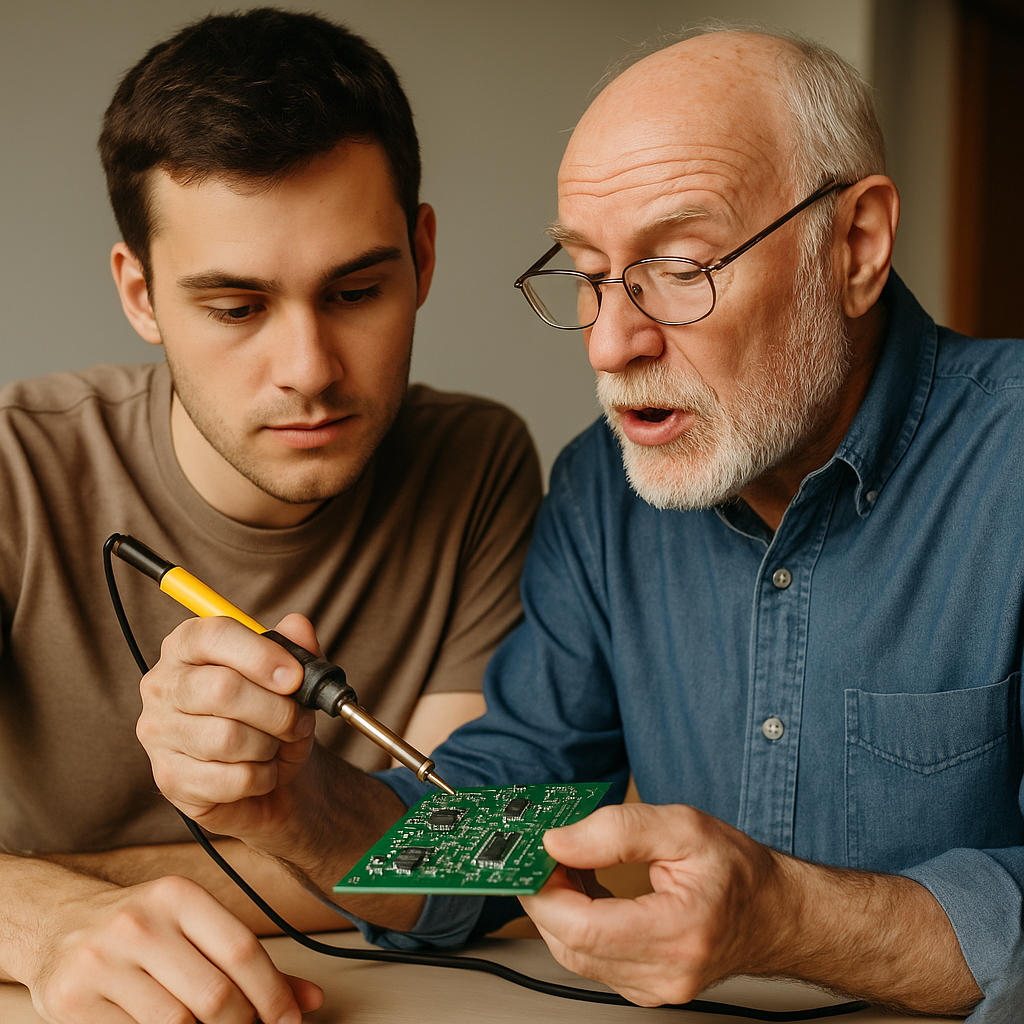
For a seasoned ham, some (many) YouTube pieces are just plain hard to watch. You know you're looking at something that has been generated only to get clicks and comments. For that reason, I avoid many of these channels that talk about the greatest thing since sliced bread. The ones that I like, and still gravitate to regularly, are those that offer some advantage to a project that I am working on. Soldering tips for the heavy-handed, for example, or those that help you understand a new transceiver you've just acquired. Many instruction manuals are nasty pieces of work nowadays, and supplementing them with a well-done video or two can be SO helpful.
"Recently I watched a few videos on setting up the Icom 7300 to interface with the N1MM logging program, so that radio functions can be controlled through the program," Brando [W3TKB] told me. "Reading the N1MM instruction manual online was a total slog, but watching three different videos on the subject made it a breeze. I've also watched YouTube videos on the basics of tube amps and how to operate/tune them, building dipole and various other wire antennas, and an introductory video on POTA and what its all about." Brando remains an enthusiast for this kind of online training, but from his description, he's focused on "how to" stuff and not necessarily on the latest-and-greatest hype.
So, Who Wins - Your Local Elmer or the YouTube Expert?
I did a bit of an impromptu survey before I wrote my column, and quite frankly the results were mixed. While the value of some YouTube videos is often ridiculed, there are those that shine and the major element of common ground was the discrimination required to choose between the two. Hams suggested that obvious click-bait tactics and a clear reliance on AI as resource material wouldn't be seen by the quality YouTubers with a history on their channels. But for the most part, my respondents indicated that they'd like to see a combination of both personal connection and video training.
 Tom [W9TR] reminded me of the great value that some clubs place on training and mentoring. Take a look at the detail on his club, Colorado's 285 TechConnect Radio Club and you'll find an organization that focuses on the Elmer concept to develop the level of competence of their membership (while attracting newcomers.) Jeff [WR2E] reminded me that the same issues develop with the trust you place in a personal mentor. "It's the same issue as with YouTube," said WR2E. "Somehow, you must separate the wheat from the chaff. How do you know that the grouchy old guy at the club knows his stuff?"
But I had many comments from people who are grateful to have worked with some of the best hams in the business. For Monty [KJ5CTX] an Elmer like Corky [WJ5H] will never go out of style, no matter how many wonderful YouTube videos have come and gone.
Jerry [AD5CL] provided a nice finish to this question. "So, can Elmering be done in a video? Can it be done over a virtual, 'screen to screen' contact? Technically, yes. Relationally? We as humans are wired for relationships. So this ham’s answer is a humble NO."
VY 73 for now, Dave W7DGJ

Have a comment or question? See what others are saying now in our Forum discussion! CLICK HERE and JUMP INTO THE CONVERSATION
|
|
Dave Jensen, W7DGJDave Jensen, W7DGJ, was first licensed in 1966. Originally WN7VDY (and later WA7VDY), Dave operated on 40 and 80 meter CW with a shack that consisted primarily of Heathkit equipment. Dave loved radio so much he went off to college to study broadcasting and came out with a BS in Communications from Ohio University (Athens, OH). He worked his way through a number of audio electronics companies after graduation, including the professional microphone business for Audio-Technica. He was later licensed as W7DGJ out of Scottsdale, Arizona, where he ran an executive recruitment practice (CareerTrax Inc.) for several decades. Jensen has published articles in magazines dealing with science and engineering. His column “Tooling Up” ran for 20 years in the website of the leading science journal, SCIENCE, and his column called “Managing Your Career” continues to be a popular read each month for the Pharmaceutical and Household Products industries in two journals published by Rodman Publishing. |

Articles Written by Dave Jensen, W7DGJ
- Trials & Errors #73 (Feb 7, 2026): Playing with Radio - February 7, 2026
- Trials & Errors #72 (01/19/25): Greetings from Outer Space - January 20, 2026
- Trials & Errors #71 (01/05/26): Mentors or Elmers? Optimize the Process - January 5, 2026
- Trials & Errors #70 12/15/25: General Electric and the Alexanderson Kidnapping - December 18, 2025
- Trials & Errors #69 (11/21/25):The Man behind AM Radio - November 25, 2025
- Trials & Errors #68 (11/04/25): The Value of YouTube vs. In-Person Elmers - November 4, 2025
- Trials & Errors #67 (10/10/25): Defending the Spectrum - October 11, 2025
- Trials & Errors Issue #66 (Sept 22 2005): High Water: Ham Radio's Role in 2004 Indian Ocean Tsunami - September 25, 2025
- Trials and Errors #65 (9/10/25): Defining the "Spirit of Ham Radio" - September 10, 2025
- Trials and Errors #64 (8/24/25): Tech-Focused Hams -- A Shot Across the Bow to ICOM, Yaesu and More - August 24, 2025
- Trials and Errors #63 (08/10/25): A Digital Radio "Plug 'n Play" Experience - August 11, 2025
- Trials and Errors #62: Celebrating Radio Innovation and Innovators - July 27, 2025
- Trials and Errors #61: The Carrington Event -- The "What If's" of our Sun's Activities - July 13, 2025
- Trials and Errors #60: How Shorthand Moved from Telegraphy to Ham Radio - June 30, 2025
- Trials and Errors #59: Misinformation Surrounding the Origins of "Morse" Code - June 10, 2025
- More articles by Dave Jensen, W7DGJ...