


to QRZ
Latest Awards




Trials and Errors #65 (9/10/25): Defining the "Spirit of Ham Radio"
Since my first license years ago, I've heard mentors and friends from ham clubs refer to something called "The Spirit of Ham Radio." It's been so often repeated, both in my personal interactions as well as on the QRZ forums, that I felt it merited an article. What IS this "spirit" integral to the ARS? Is it really possible to have one guiding principal -- or a series of guiding principals -- in an activity so broad and full of subdivisions as is ham radio?
 In the short editorial below, I've dissected this "spirit" into five sections, as I believe these are the areas that have been discussed in the past regarding this universal thread that runs through amateur radio. Of course, radio comes with a set of very specific guidelines eminating directly from the regulatory agency in each country . . . but while that may set a direction for this culture, it doesn't go so far as to imbue a "spirit" to the hundreds of thousands of practicioners across the globe. There's something else working here behind the scenes, something much more esoteric and ethereal than dictum from the FCC.
Here are my five categories . . . Please add your thoughts to the forum that is referenced at the close of this piece. I don't know about you, but I'm proud to have accomplished as much as I have in amateur radio. It's been a personal journey, but also one where I've accomplished goals along with friends and colleagues around the world. I can't think of any hobby or activity that would allow me to have this much fun.
VY 73, Dave W7DGJ
 --- Five Elements of the Spirit of Ham Radio ---
Service to the Public Combined with Family Safety:
It's clear to anyone who looks closely at amateur radio from the outside that there's a deeply-rooted commitment to serving one's community. Particularly during emergencies, hams have provided reliable communications when other systems fail. Even before there was a signficant amateur market, in the early years of radio the professional operators who manned those radios on ships and in key locations around the world were imbued with this community spirit. Where did it come from, and how did that passion originate? From its onset, radio technology has been a gift shared with the public.
I don't see this "spirit" in other technologies . . . Do IT developers -- Computers, Software or AI -- feel this need to serve the public? No . . . with the exception of open source, those are a business of making a buck. While that's fine, I believe that amateur radio stands alone in the category of service, as it is truly a technical activity with good works for others always in mind.
Of course, there is also within our ranks a growing number of users who have joined the Amateur Radio Services in order to protect that community closest to them -- their families. This "SHTF" contingent, which radio clubs say is one of the reasons for the growth of new operators, considers the acquisition of skills in radio communications to be one of the prime requirements for life after a disaster. While some of these new operators will purchase equipment but shelve their radio skills for this potential future, others buy into the spirit of the broader ham radio and discover the pleasures of working a radio for fun as well.
 Innovation and Radio Technology Skills at the Core:
Ham radio has a long history of dedication to pushing the boundaries of communication technology, and this is regularly accomplished through amateur experimentation. That's in our charter from the Federal government. We have developed a tradition of building and modifying equipment . . . our radio operators are driven by curiosity and the challenge of improving communication methods. Whether it is developing new modes or pushing the boundaries of existing modes, Hams have learned to use the experiences of brother/sister hams to grow their own expertise. We read technical journals, watch YouTube videos, attend conferences and Hamfests in order to pick up the knowledge and experiences of other hams and to grow our stations and skill base.
There is also, as written about last month, a solid contingent of primarily younger hams who are integrating amateur radio with other technologies such as the Internet. These digital ham operators are truly innovators and explorers, crossing the boundaries of multiple 'new tech' and bringing that to bear on the "old school" methods of RF communication.
This drive to expand our knowledge base and our radio communication skills is integral to the spirit of ham radio. The ARS has always encouraged the learning of technical skills, and this might include RF science, physics, electronics and electrical engineering elements. Even the new ham with only an HT in his or her hand picks up the quest for more and more operating and communication skills.
Spreading Goodwill across Borders:
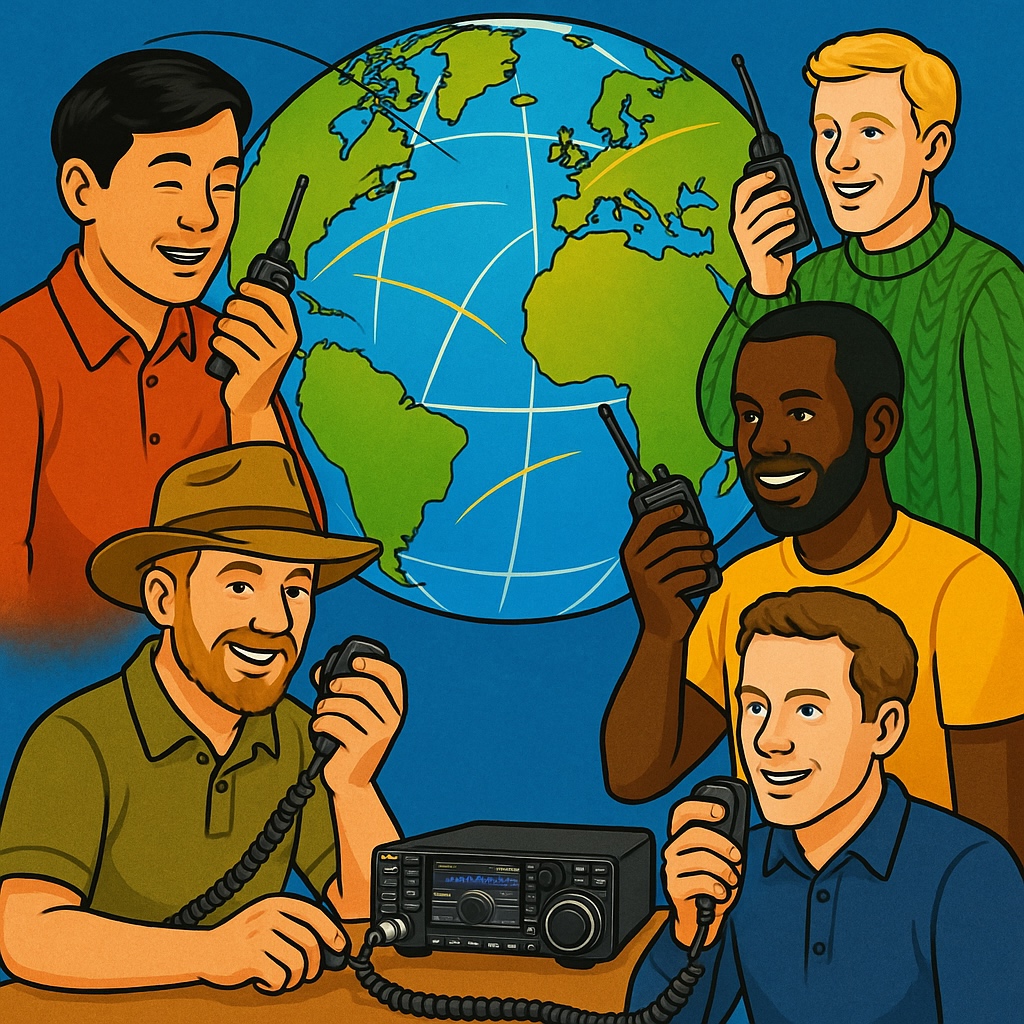
When I think about this mysterious "spirit," this category probably weighs in near the top in my opinion (please add your comments at the end of this article in the linked Forum discussion). It was one of the reasons for my early interest in radio, even as a Short Wave Listener. I would enjoy hours of listening to stations broadcasting shortwave from countries all over the world, learning about their culture, their people and how they view the world. This may have been one of the reasons why geography was a strong subject for me as a student.
As I became a ham, I was inspired by this desire to talk to people all over the world. Decades later, I believe this is still an important driver for me to continue with radio as a hobby. Governments will come and go, wars will be fought, and there will be more and more stress between nations. This is just natural and one of the problems of an 'advanced' civilization. But in the activity of Amateur Radio, we are each of us an ambassador. Not only do I consider myself an ambassador of the United States, I consider myself an ambassador for my beautiful State of Arizona and the community in which I live. That's our job, isn't it? And wouldn't you agree that we are also ambassadors for Amateur Radio itself?
That's why it pains me to listen to some of the crazy stuff on 75 meters in the evening, or one of the other special frequencies where oddball hams hang out. If those voices believed they are ambassadors, we might have a cleaner set of bands across the board. As society becomes more and more opinionated and fractured, radio will have influence on at least some of us. We find via our stations that people are just people, no matter where in the world they live.
 Volunteer Based and Community Driven:
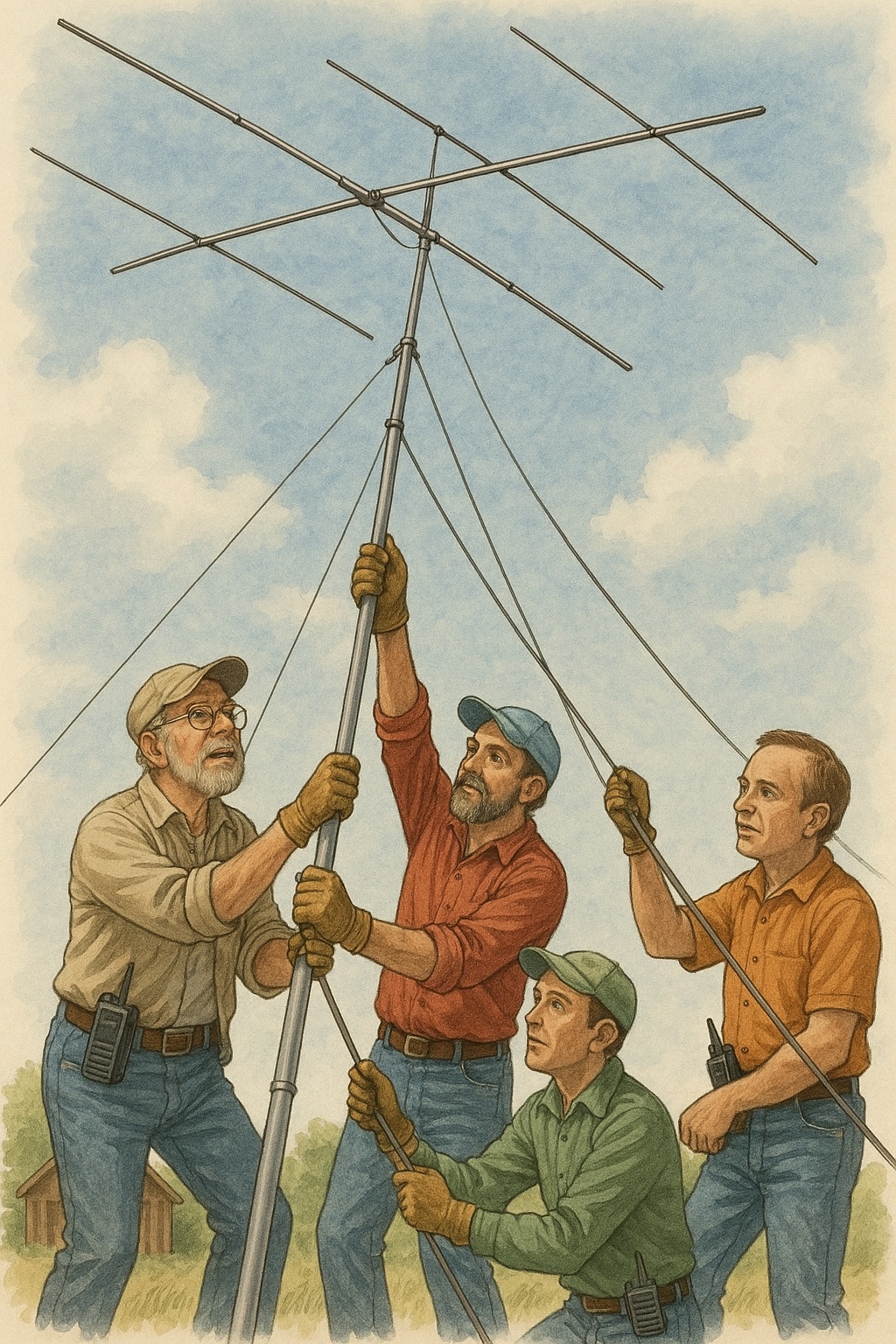
Ham radio has a culture of experienced users who offer their time and energies to newer operators. Whether you use the term "Elmer" or "mentor," there are few activities in the world where you can look for and find help (and sometimes boundless energy) from people outside your normal circle. I was blessed with two terrific mentors as a teen and together they ensured that I stuck with it, learned the code, and got tested.
When coming back into ham radio after many years without a station, I called a local ham at random and asked for his help. Soon thereafter, I had several hams in my yard helping me put in ground rods and string up a dipole. I was invited to a weekly luncheon where I met with other experienced radio operators, each of whom had an area of expertise (and passion). These hams ranged in age from their 20's into their 80's. I found myself grieving after one of those new friends became a Silent Key. This comradery was all completely unexpected and proved to me that amateur radio is a community activity and not one for a loner. I've been the loner for much of my life, but in ham radio I work in conjunction with others and this brings out the volunteer spirit. I became an ARRL and Laurel System VEC, hoping to give back in kind what was given by others. This spirit of togetherness with other hams runs deep in anyone who is proud of their call sign.
Freedom, Adventure, and the Love of the Outdoors:
Some hobbies keep you fixed in one part of the house, and years later the shape of your buttocks has been pressed into that chair. Stamp collecting comes to mind, or even radio from our earlier days of massive equipment. (Getting a full Collins station into a station wagon and hitting the road wasn't very realistic.)
In fact, our radio activities have been enhanced over the last couple of decades with shrinking radios and the joys of QRP operating. POTA came out of nowhere and kicked all of our behinds out of those easy chairs and into the field, witih specialized antennas, power supplies and solar. It's been a blast, and club members report all the time that new hams are coming aboard to take advantage of "radio in the park." Some clubs report that their hams have teams that go out into the outdoors in jeeps on a regular basis, using HT's to communicate. Whether you're keying up a QRP radio in the high desert after a five mile hike, or zooming around sand dunes in your 4x4 with a bunch of VHF/UHF radios, you represent the spirit of freedom and adventure found in amateur radio.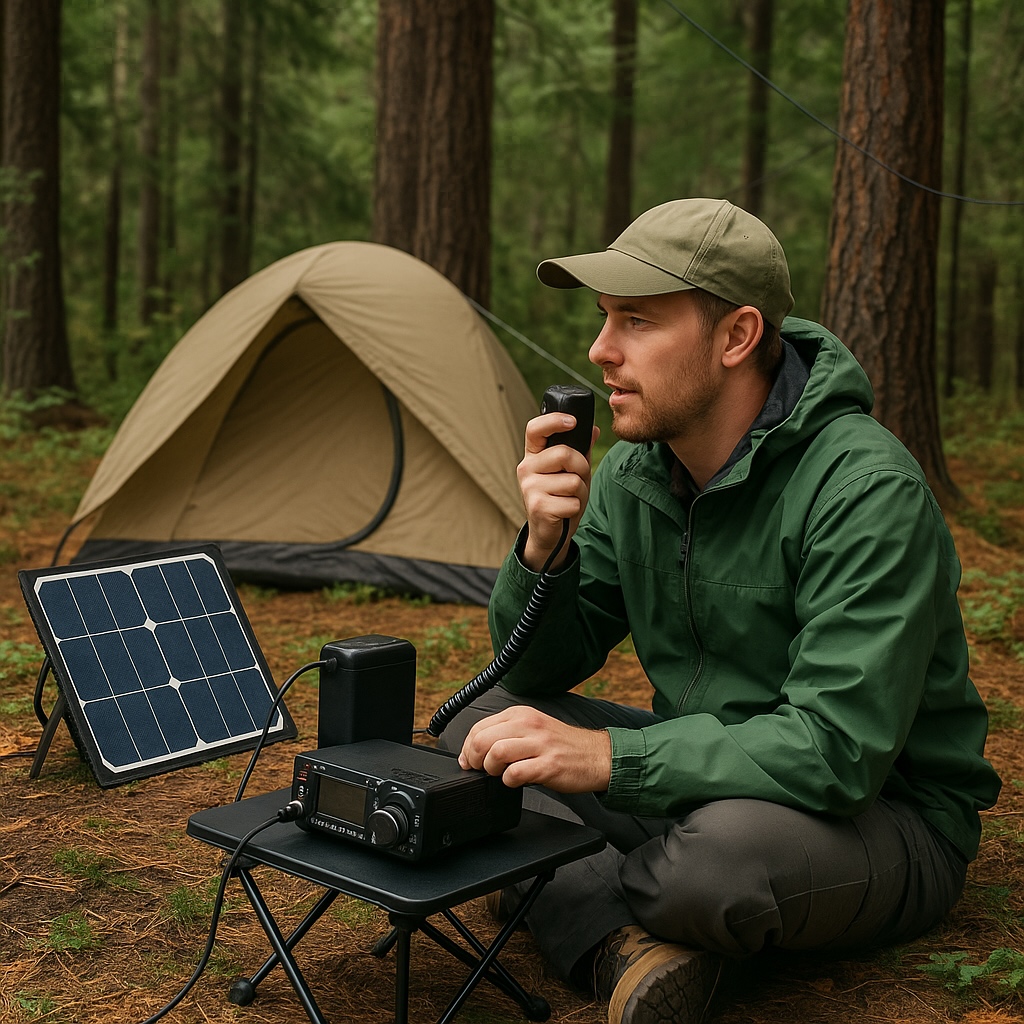
In Conclusion
Going back to my title for this column, "The spirit of ham radio," I'd like to ask my readers to post in the forum discussion about whether or not there's one overriding element of spirit that has been important to their radio interests. Of the five elements of this spirit listed here, I think the extraordinary aspect of community engagement to support new operators is the one that most reflects how unique amateur radio really is. Anyone who's ever asked for help will confirm this.
Our interest has so many elements and side channels to explore that it's often challenging to see the common ground between them. But that spirit is there, clearly evident when you dive into amateur radio and begin your personal journey of discovery and skills improvement. Whether it is public service, fostering international goodwill or this pursuit of knowledge that drives you, I'm sure you'll agree with me when I say that amateur radio offers a unique balance between technology and social connection. In this day and age of personal devices that keep us separate from those around us, that social connection aspect surely does have a place in the overall spirit of ham radio.
 Dave, W7DGJ (This last photo, taken on a subway in Tokyo, shows what I meant by my last line above.)