


to QRZ
Latest Awards




Trials & Errors #72 (01/19/25): Greetings from Outer Space
It was October of 2008 and Sam Mason (KF4UGA, Easley, SC) had been enjoying a focus on VHF/UHF, working repeaters using rigs in both his house and truck. Sam had heard talk about satellites and it caught his interest . . . particularly the discussion about the International Space Station (ISS) and 25th anniversary of the first amateur radio QSO from outer space. There was serious ham "buzz" about the ISS, enough so that Sam decided to point his antenna skyward and give it a try. The problem was that he lacked many of the sophisticated tools that serious satellite chasers considered essential.
"Owen Garriott, W5LFL, had made the first ham radio contact from orbit during the Space Shuttle Columbia STS-9 mission of November,1983. And before that, the public had no ability to talk to astronauts in space . . . that was the stuff of NASA or perhaps someone like the President of the United States," Sam told me in a recent conversation.
"As I started investigating it, I read that there would be a pass directly overhead my region in just two days' time. I had heard some audio and knew that there were also slow-scan images being sent back to Earth. So I got up super early on a Wednesday and started calling the ISS. I had no automated equipment -- everything I did was basically jury rigged and yet it worked. I got a call into the ISS and spoke to Richard Garriott, Owen's son, who had taken incredible pains to get onto the ISS as a Russian space tourist cosmonaut."
I'm going to tell you a lot more about the two Garriotts in today's column, as they were gentlemen who had a clear love of radio as well as space sciences. But first, a bit of trivia about space travel and the original Ham in space!
The W5LFL CQ from 160 Miles Up
Owen Garriott, like many hams, had an early interest in electronics. His dad, also a ham, taught him the code back in 1945. He got his first license at 15, keeping it up through his college years. He earned a PhD in Electrical Engineering from Stanford and later moved into the NASA program where he had been selected as one of a few "scientist astronauts." At the time, NASA was broadening their program to include more than just test pilots, although Owen had to take a year out and become a licensed jet pilot himself before he'd be considered for space flight.
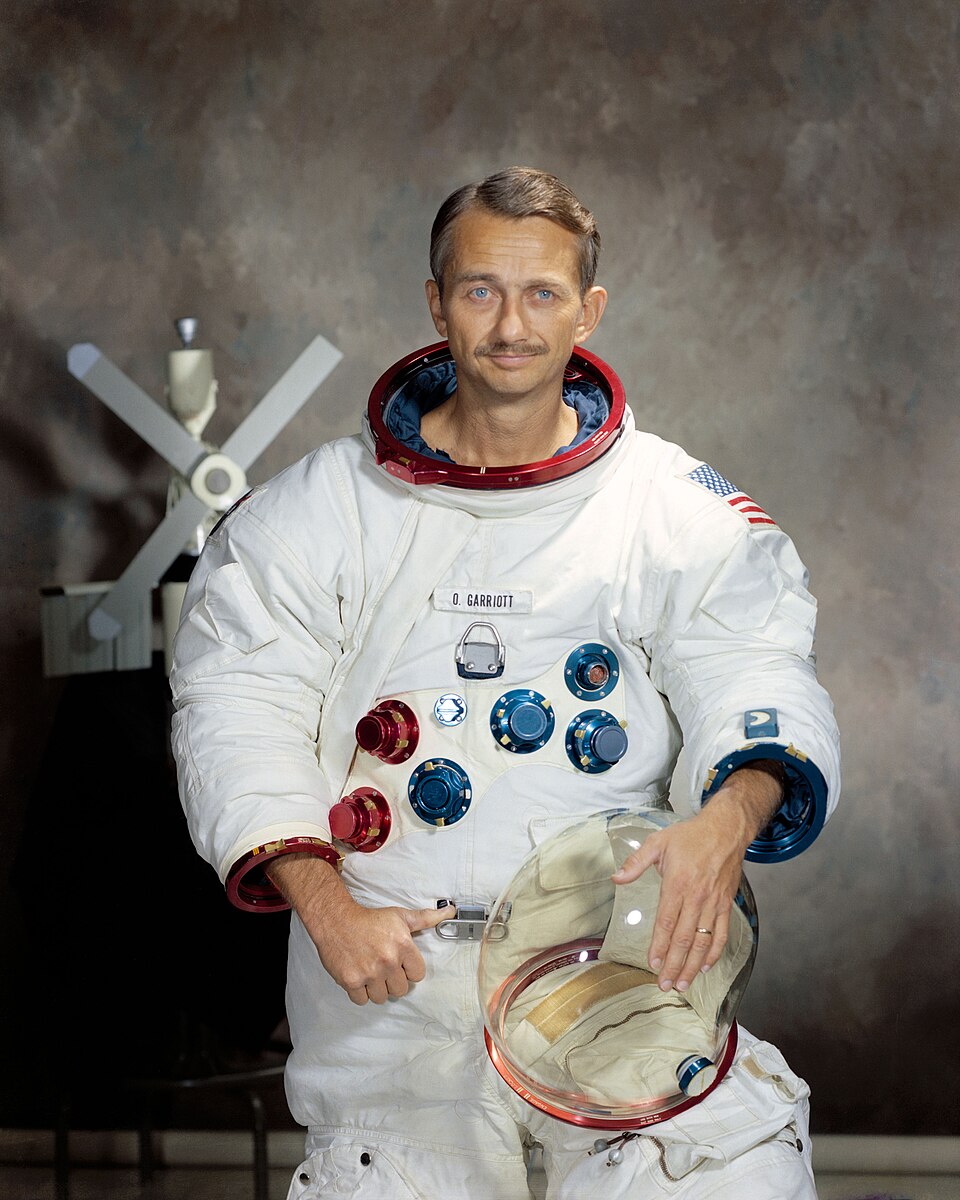 Owen's first opportunity to travel into space came on the Skylab 3 mission in September of 1973, where he set a record of 59 days in space. But it was on his second mission that he became a part of amateur radio history . . . aboard mission STS-9 (SpaceLab) in November–December, 1983. It was a much shorter trip, but a busy one. Over 70 experiments were conducted during that time, and there was also an informal element of radio play that Owen initiated. He brought along a 5-watt Motorola 2-meter radio and the resulting QSO's made history as the first radio contacts between the public and NASA astronauts. Listen to the recording that Alan Davenport [W7APD] made of that first one, conducted with Lance Collister [WA1JXN].
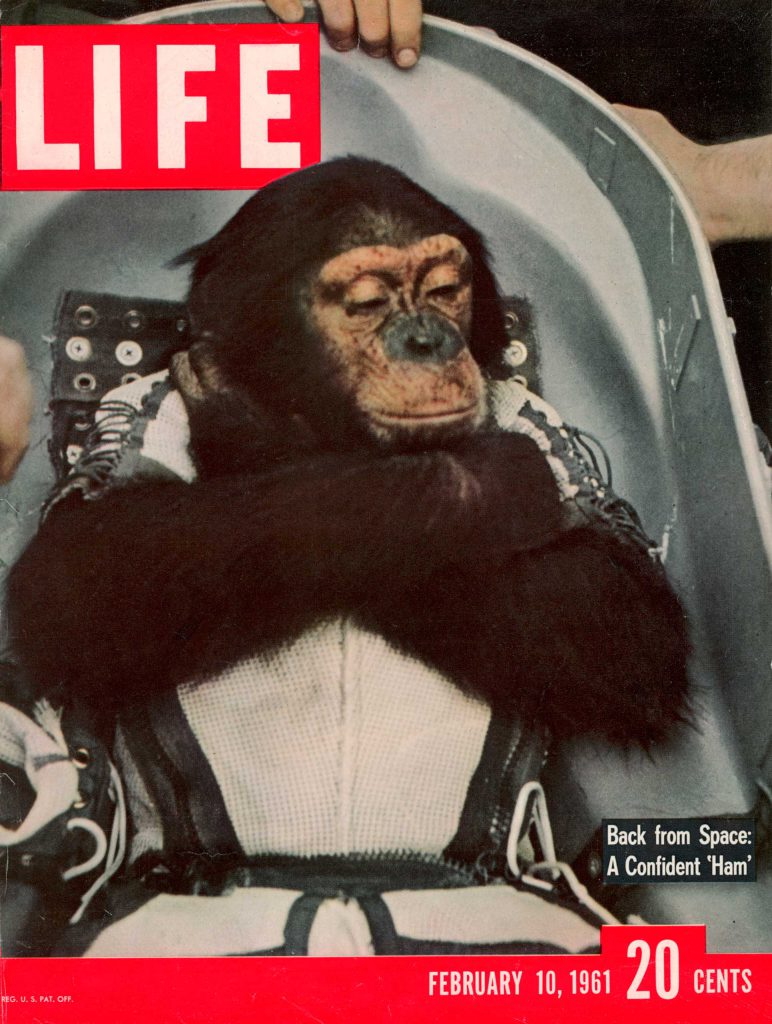
Like the chimp that preceded Owen, there was a certain playfulness which this astronaut brought to the mission. For example, mission control in Houston jumped out of their seats when the voice of a female (Owen's wife) beamed down on the radio from 160 miles above. She stated, "I decided to join the fellows and bring them a home cooked meal." He even had one of the ground control operators in on the gag . . . that fellow joined in a conversation with this pre-recorded voice that he had snuck aboard the mission. Twenty years later, when Owen told this story, there were still ground control crew who hadn't figured out how he pulled it off. [FYI added later: Check out the forum discussion for an email from Owen's son, Richard, about this prank and how they pulled it off.]
 Like Father, Like Son
Richard Garriott, Owen's son, also became a ham radio operator [W5KWQ], and he inherited his father's sense of curiosity and love of electronics. Since his childhood in Texas, he had dreamed of becoming a NASA astronaut like his dad.
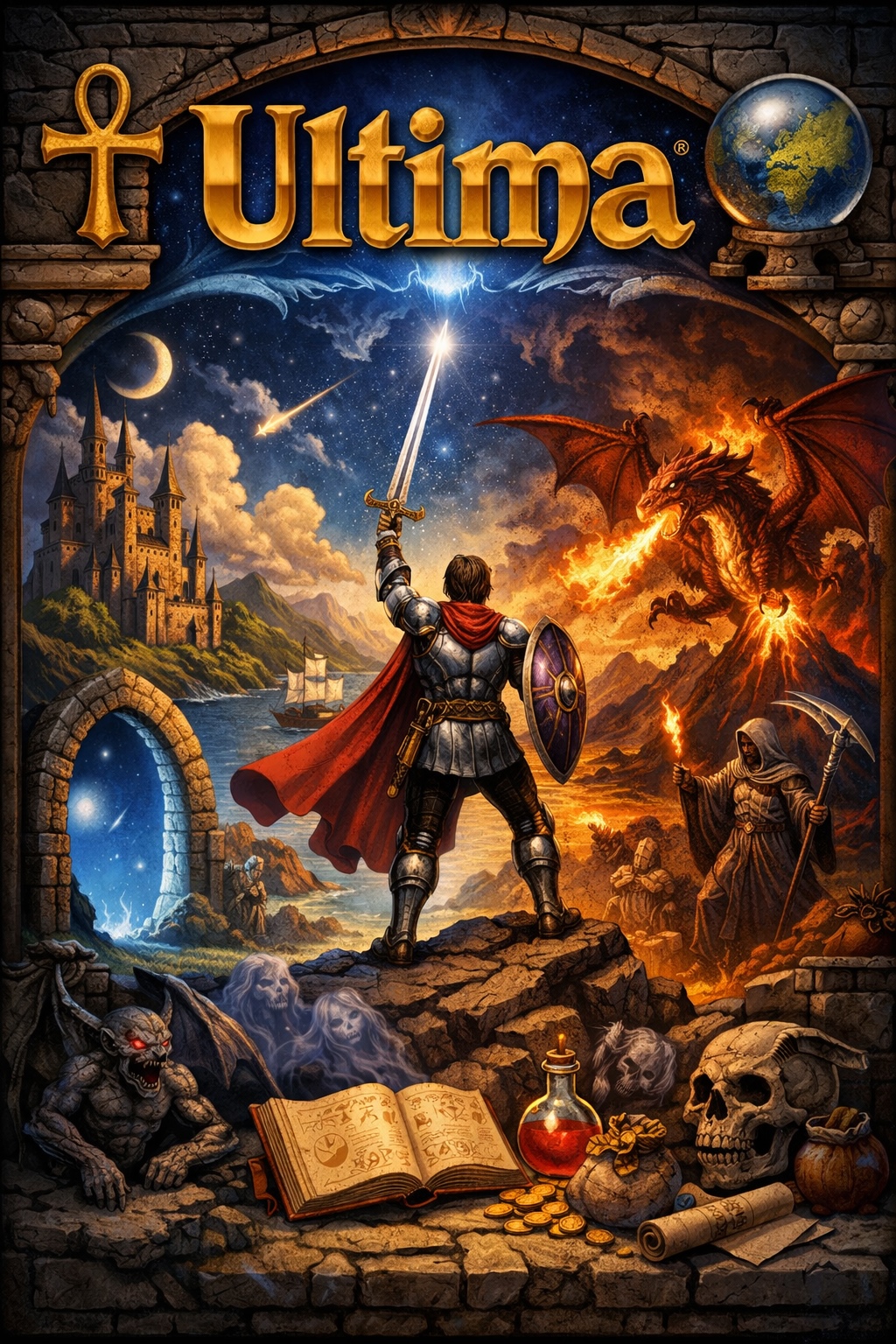
Unfortunately, he was told early on by NASA that eyesight problems would block his ambition. As a result, he focused on computer game development where he successfully developed the Ultima series (recognized today as one of the pillars of the modern video game industry).
Richard became a wealthy man as a result of his talent in game development through nine iterations of the Ultima series. At that point, still thinking about outer space, he realized that he could indeed follow in his father's footsteps if he were to take a private path as a space tourist.
After a reported investment of $30 million USD, Richard was granted access to the cosmonaut training center in Russia and scheduled for a future flight to the International Space Station. It took a grueling year of training, but he pulled off his dream and became the first American to build on a family tradition of space travel.
Just like his father before him, he had a 5-watt 2-meter radio with him in the ISS that he used to beam down his CQ and connect to Sam Mason that morning. I've heard that in the short time Richard traveled on the space station he was able to conduct about 500 two-way QSO's that he paper-logged for later QSL's. Sure enough, Sam received a very nice letter on Richard's stationary confirming their QSO -- something that I am sure he has framed right now in the shack. (I certainly would).
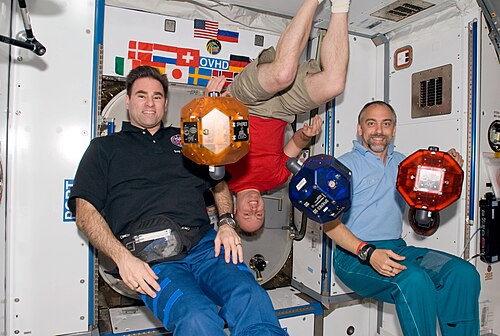 Owen Garriott played a role for his son's space flight by acting as mission control at Kazakhstan's Cosmodrome. Owen was also in attendance when Richard and two cosmonaut colleagues landed safely on land twelve days later. Richard reported that unlike landings at sea, it was a rough and tumble sudden stop. (Richard is on the right in the photo here, courtesy of Wikipedia.)
If you've been in touch with hams on board the ISS, you're a part of a tradition that is unique to amateur radio. Drop into our forum discussion linked below and tell us about your QSO, as we'd love to know more. Space communication is just one more interesting element of our hobby!
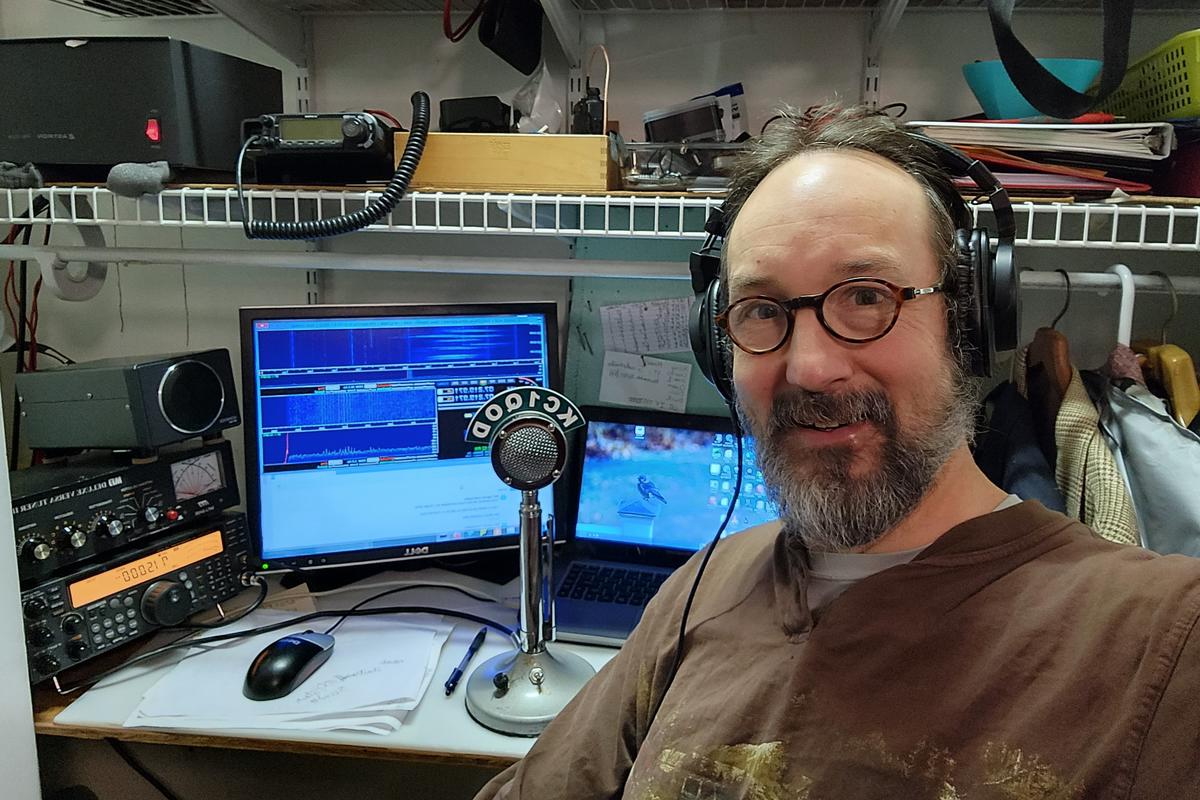
PS - Thanks to Matthew [KC1QOD, below] for the inspiration and ideas for this feature!