


to QRZ
Latest Awards




Trials & Errors #74 (3/1/26): Marketers, Help Grow Our Small Innovators!
Marketers -- Help Grow our Small Innovators!
Today's topic is not being covered by YouTubers or bloggers dealing with amateur radio. It's a concern to me because I write about innovation and I want to ensure that our most creative suppliers have access to the marketplace in the same way that the larger companies do. Many of my columns highlight these innovators who may have a large impact on future Amateur Radio products and services.
 Have you noticed that companies like ICOM, Yaesu, Kenwood and others always seem to be in the business of catching up? That's right -- it's the smaller companies who live at the cutting edge of technology. We need to support them and often that means doing business through their own web storefronts instead of the glossy pages of the big three dealers. For some hams, that feels like a risky proposition.
As an example, the other day I spoke to a Canadian who relayed a story about his dealings with a company that I admire. It turns out he had used PayPal and the product was a bit late on shipping, so PayPal held back. The company realized that their final payment hadn't arrived and the sale was cancelled. They didn't trust the buyer, as the buyer hadn't released those PayPal funds. And the buyer didn't trust the manufacturer as they requested funds through a Hotmail account. Both parties just walked away upset. It was a completely messed-up transaction and one where I couldn't seem to help either party.
Some of us know how to design and build a great transceiver, antenna or ham gadget but don't feel comfortable with sales and marketing. In the USA, and in other major markets, there are dealers who know all about good marketing practices. In the USA, the big three are DX Engineering, GigaParts, and Ham Radio Outlet. Good sources, all of them. But their world and the way they operate is far removed from that of the "boutique" supplier of radio goods.
And that leaves a lot of neat little businesses stuck finding a way to reach you and make a sale.
Different Routes to the Same Market
The ham radio market is an eclectic mix of company types and marketing methods. Many businesses are small innovators working out of a garage with a cool idea they've come up with. Others are successful and hopefully profitable companies who have a workforce and years of reputation behind them, but they'll never get past the $2 million annual sales mark. And finally there are the big guns -- the larger companies, many Japanese, that build and sell our major pieces of gear. These manufacturers all sell through those large dealers in their respective markets, and some of the smaller companies have chosen to go the same route.
 Many hams have a dealer behind their purchase because they don't trust an unknown website (as in my example with the Canadian ham). They've grown comfortable with these major suppliers over the years of their hobby; it's much easier to trust payment to a company they've done business with before, whether on a cable or a $10,000 transceiver. Dealers thrive on this "credibility factor" -- it's what sustains their impact in the amateur radio marketplace. And yet, this service has a definite cost to the small company, one that is passed on to the ham. That big dealer doesn't get the chance to earn much when selling those Japanese transceivers, so they must make it up on the other products in their catalog. They generally need a 30% profit margin, which means that a product developed to sell for $995 could have a $1295 retail price in the catalog.
This pastime of ours is expensive, and cost matters to me. I am the typical "cheap" ham radio operator and you may be too. But another concern is that I want to see the best and brightest amateur radio suppliers survive. If the smaller, truly innovative suppliers are forced to give up a large piece of the profits, they could end up with lower survival odds.
It could be just as risky, I'd imagine, to set up an Internet storefront and then wait for customers to appear. As a result, it's a tough decision as there are two roads leading to success or failure in this tiny amateur radio marketplace.
The Direct Sale
It sounds so easy to set up a web storefront. But that wacky website you get for $350 from GoDaddy really lacks the credibility that many hams need to open their wallets. I've purchased from some squirrely looking websites and kept my fingers crossed. (And the used market is full of scams, but that's a topic for another column.)
Some companies can pull this off. Rig Cables is one of those, and it has an attractive website. I spoke to the COO of Rig about their decision to sell direct: "We only sell direct through our website but we've invested in advertising on QRZ, QTH, and with the ARRL to support sales," said David Merchant, Chief Operating Officer of Rig Cables. "This direct-selling relationship gives hams a unique ability to customize to their needs. We've invested over $200,000 in automated cable prep equipment. When you buy through a distributor or retail store, you must buy their closest match to what you need. We like dealing with other hams one-on-one and it works for them as well because they get exactly what they want."
If a new company sets up to sell directly, they're going to need a longer startup time to generate social media and get product reviews on platforms like eHam, YouTube and so on. Generating word of mouth is much slower than through a big catalog introduction, and it takes time and effort to build.
The Dealer/Distributor - Where Does that 30% Go?
I spoke to Jon Pierce, Marketing Manager for GigaParts, and asked him about the difficult choice that these ham suppliers must make when they consider how to sell their goods: "Direct-to-consumer profit margins are much harder to achieve than you'd think. Once you factor in customer acquisition, shipping, returns, and support, it doesn't look quite as sweet. They find that distributors provide the reach they need, along with built-in trust. Distribution is a two-way street. At GigaParts, we earn trust with manufacturers by representing products accurately and supporting them long-term, and then we must earn trust with customers by standing behind what we sell with support," he told me.
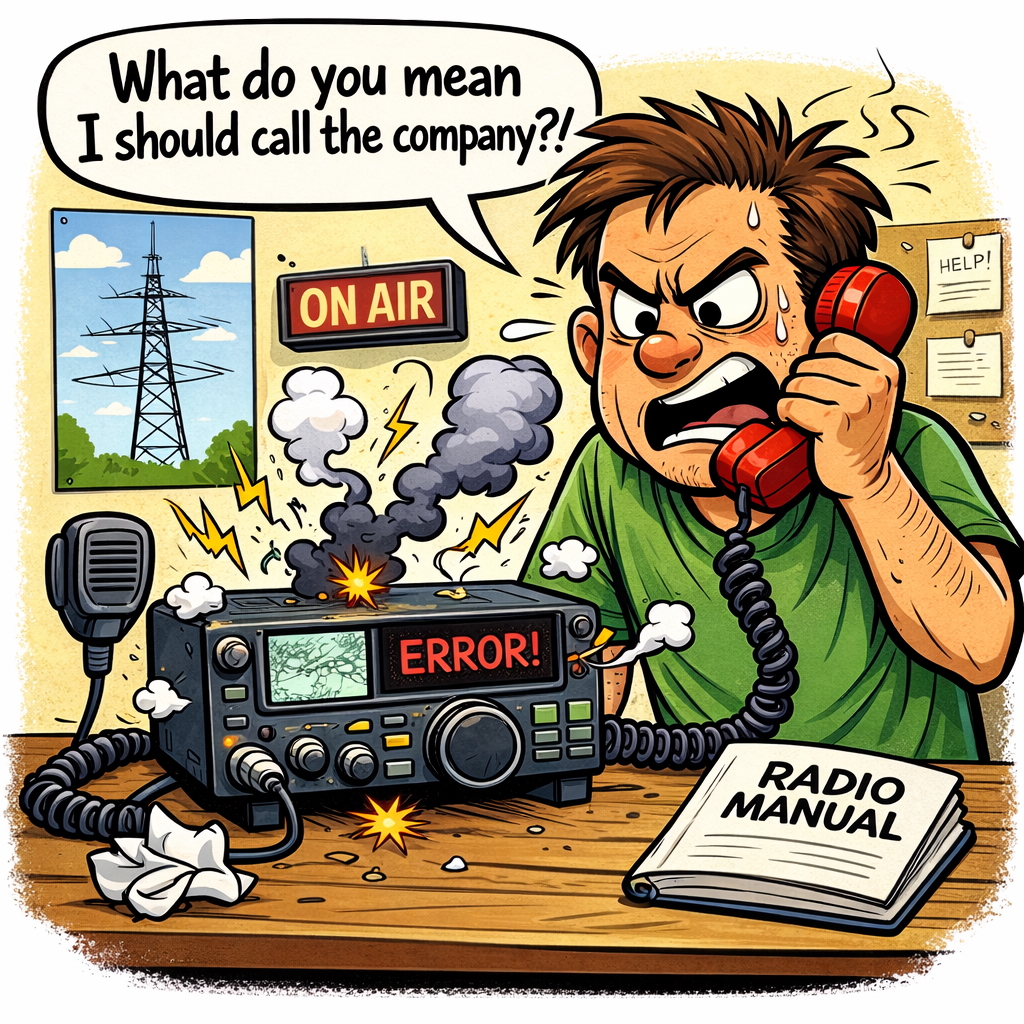 For me, I'm not sure how much emphasis I would put on getting support from dealers. They'd have a hard time selling me on that advantage because it's in the DNA of the ham radio operator to go straight to the source. If I've got a problem with my radio, I'll call the manufacturer directly or I'll ask other users on a social media forum. Every time I was frustrated by something and called my salesperson at the dealer, it was suggested that I reach out to the brand itself. So, if ABC Manufacturing chose to go the dealer route, they'd still need to keep technical support and service staff on board.
Of course, the manufacturer does see some lower costs by selling only to the dealer. As Jon said above, they'll take over certain elements of sales that had been a part of the cost of doing business. That 30% margin of theirs will put your product into their inventory (referred to as their "catalog" although most sold online now) and create sales that you may not have had by hanging up a shingle and a website.
At the end of the day, however, those advantages affect the retail price and the major decision then becomes, "What will the market bear?" That's unfortunate. It can make some of those cool new gadgets too expensive during the critical days that they are trying to become established.
An Idea with Merit
The fact is, selling through a great dealer/distributor like the three we have in the USA is an effective way to market ham radio products. You'll get the exposure your idea needs, and you'll be able to concentrate on the development of your technology while allowing another entity to market your goods. The bad part is that those dealers will only stock and sell certain "sure things" and when they do, they'll demand this hefty profit of their own. That either comes out of your own profits or makes the product far more expensive than it should be.
 But, how about if GigaParts or DXE or Ham Radio Outlet operated like Big League Baseball, and they kept the up-and-comers out in the minors, where they could watch them grow as they learn to build a business? This could be, for example, DX Engineering's Forty For the Future, or HRO's Headliners of Tomorrow. A special regular promo would announce these new products from small suppliers. They'd have an easy, low cost of entry to the dealer and could continue their own websites as well. After one year, both parties would make a decision on continuing to work together in a more traditional manner. I think this idea would work to everyone's advantage in that it would put marketing muscle behind small businesses that would very much benefit from the assistance in their early years. Let me know what you think of this idea in the forum that follows!
73 for now,
Dave W7DGJ
Questions for participants of our forum:
- Do you hesitate to buy direct from manufacturers when they offer a web storefront? Or, is your major source of radio products a large dealer/distributor?
- Have you had successful product or technical support through a dealer? Or, do you generally contact the supplier directly? How often do you seek out a social media forum for help by a user group? (Facebook, Google Groups, etc.).