


to QRZ
Latest Awards




Trials and Errors #76 (3/28/26): Bringing Down the Duke
Bringing Down “The Duke”
In the early stages of WW II in Europe, Germany had begun to think about America and that country’s future potential as an antagonist. While neutral at the time, it was clear that if America entered the war, it would be on the side of the Allies. And so, as nations have always done, Germany began to place a network of spies on their prospective enemy’s turf. Central to this plan would be radio, along with a network of operators who would participate in the German plans. German technology had produced high-quality HF radio designs in very small sizes for such operations, but the Germans were limited by the fact that most spies did not know Morse code.
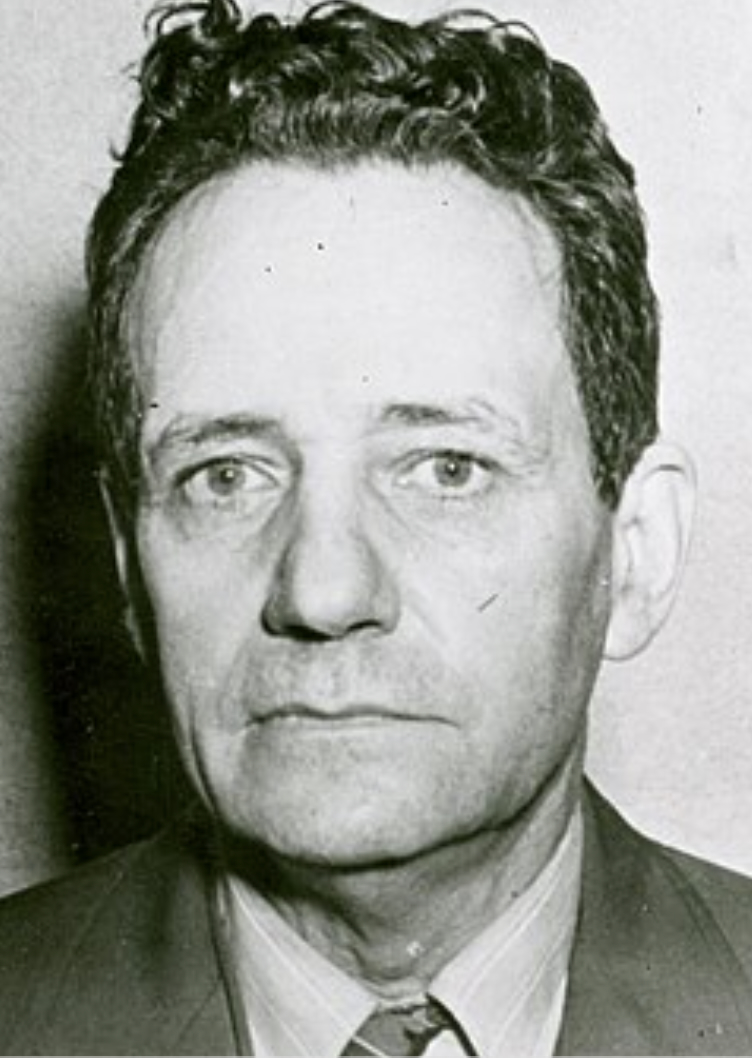 The man whom Germany chose to manage this complicated web of deceit was Fritz Duquesne (photo at left) who later became known as “The Duke” to American law enforcement.
Catching the Duke and his crew proved to be quite an effort. While he worked with a number of not-so-sharp individuals further down his network, Duquesne himself was a special kind of operator -- a real "dark side" James Bond predecessor. Naturalized as a US citizen in 1913, Duquesne first became a spy for Germany in WWI. During that war he was captured five times and managed to escape from his captors each time . . . three times from the British, once from the Portuguese, and once from the Americans! No one appeared able to hold this slippery character who was vehemently anti-British.
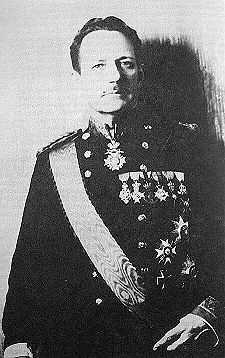
During that first war he smuggled bombs on board British ships in South America and sank a number of them, including the HMS Hampshire in 1918, taking out an important British statesman. This "Duke" was greatly valued by the Abwehr, the German intelligence service who awarded him the rank of Colonel. (Photo of the Duke in his German uniform below.)
His story gets even more interesting when you read about his exploits between wars. The Duke was an adviser on big-game hunting to US President Theodore Roosevelt, he published as a journalist, became a fake Australian war hero for a time, and even worked as a publicist in the Hollywood movie business. Amazing.
Building Plans to Infiltrate America
It was in 1937 when the German plans began to bear fruit. From the German Abwehr headquarters, Admiral Nikolaus Ritter was assigned the North American spy effort. Ritter had emigrated to the USA in 1924 to improve his American English skills. He married an American woman and moved back to Germany, rising up the ranks into a senior role in the intelligence services. With his knowledge of America and his language skills, he was an obvious choice to manage the developing spy network. Apparently, the first thing he thought about with that new assignment was how to establish a radio network that could be used to get vital secrets across the Atlantic to Germany. That information would include secrets on American defenses, ships and their movement across the Atlantic to England, industrial designs and so forth.
His team recruited a German-American by the name of William Sebold who would work with the Duke in an office in New York under an assumed name. The two would build an HF radio station on Long Island to keep the flow of information going into Germany.
Sebold valued his naturalized US citizenship, however. He secretly approached the American Consulate in Cologne, Germany during his training to let them know he'd be willing to assist the FBI as an undercover agent, an offer that immediately proved valuable. This "double agent" then became an important player in the USA effort to rein in and capture this entire network of German spies in the States.
 The German Organization in America Grows Larger
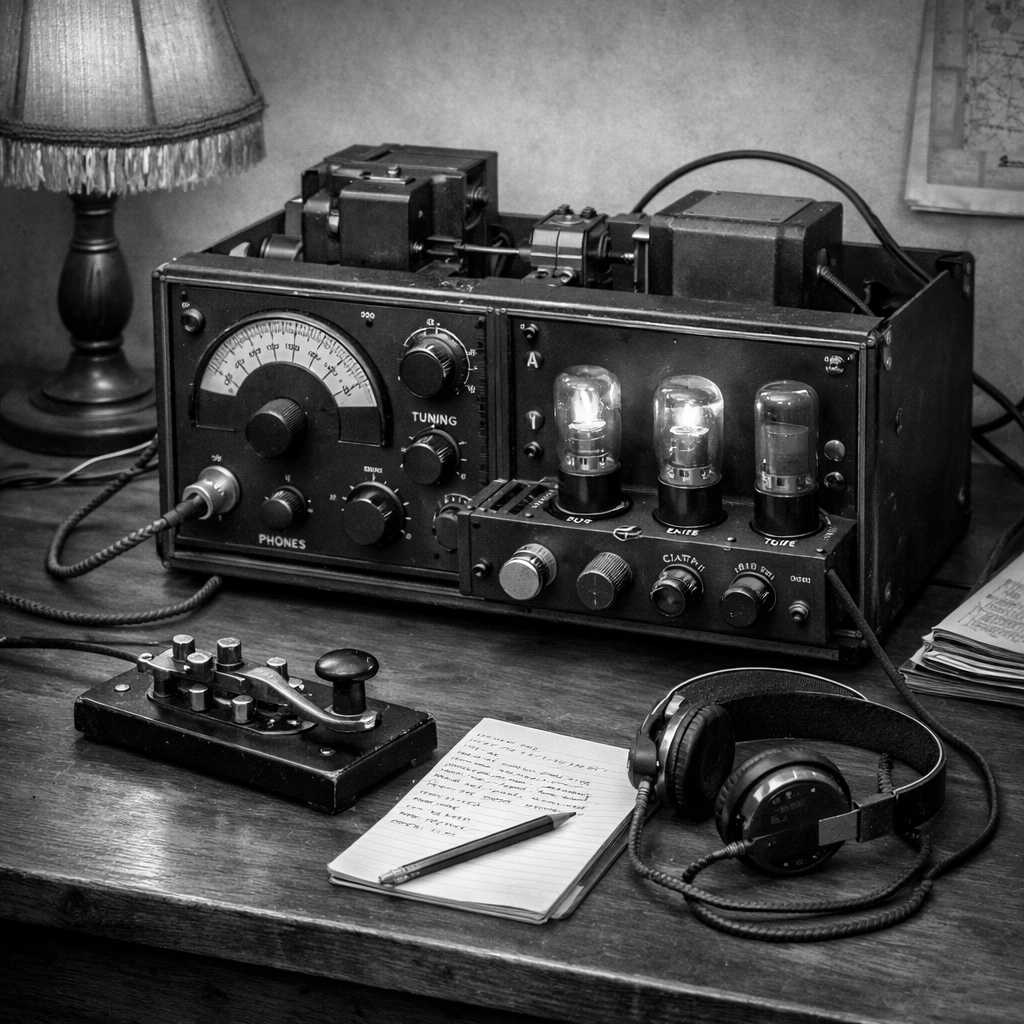
Fritz Duquesne had already established quite a downstream network by the time that he met Sebold and together set up that HF station on Long Island. One of those was Felix Jahnke, a ham and another naturalized American citizen. Formerly a radio operator out of Germany, he knew his high-speed CW but was (as many today) not cockpit qualified to build a radio by himself. For that effort, Jahnke found another willing ham, Mr. Josef Klein, who jumped into the network with enthusiasm due to his hands-on love of electronics. He built a station from scratch that outfitted Jahnke's New York apartment. (No pictures survive of that radio, left is a photo created by AI using "museum quality" information. Opinions welcome.) It's unclear whether Klein knew of the end-use of this apparatus or not, but he was eventually imprisoned for his efforts.
Another was Paul Scholz, a ham later arrested for providing another of Duquesne's colleagues with a chart of suggested call letters and frequencies for reaching Germany by CW with that 20-watt rig in the Bronx. This part of the Duke's crew was seen spending time in harbors identifying ships and cargo headed to England.
But it wasn't only hard information that the Nazis were interested in from amateur radio operators. In the late 1930's and early 1940's, Germany recruited primarily through German communities in the States, hoping they could use amateur radio enthusiasts to transmit Nazi propaganda as well. That effort had little success as most hams focused on technical rather than political exchanges (as we do today).
 The Hammer Drops on The Duke and His Team
The German spy ring's downfall actually began when the double agent, William Sebold, came from Germany and set up shop in New York. The radio station built out on Long Island for Sebold and Duquesne's team was monitored 24/7 by FBI agents operating under the instructions of J. Edgar Hoover. Over a short period of time the FBI noted the contents of more than 300 exchanges between Germany and America, ensuring that every one of the operators bringing information to the table for Germany would have enough evidence against them for a conviction. Even the Duke's live-in girlfriend, Evelyn Lewis, was closely watched by the FBI. She had been aware of all of Duquesne's clandestine activities and was herself known to distribute anti-British and anti-Semitic materials.
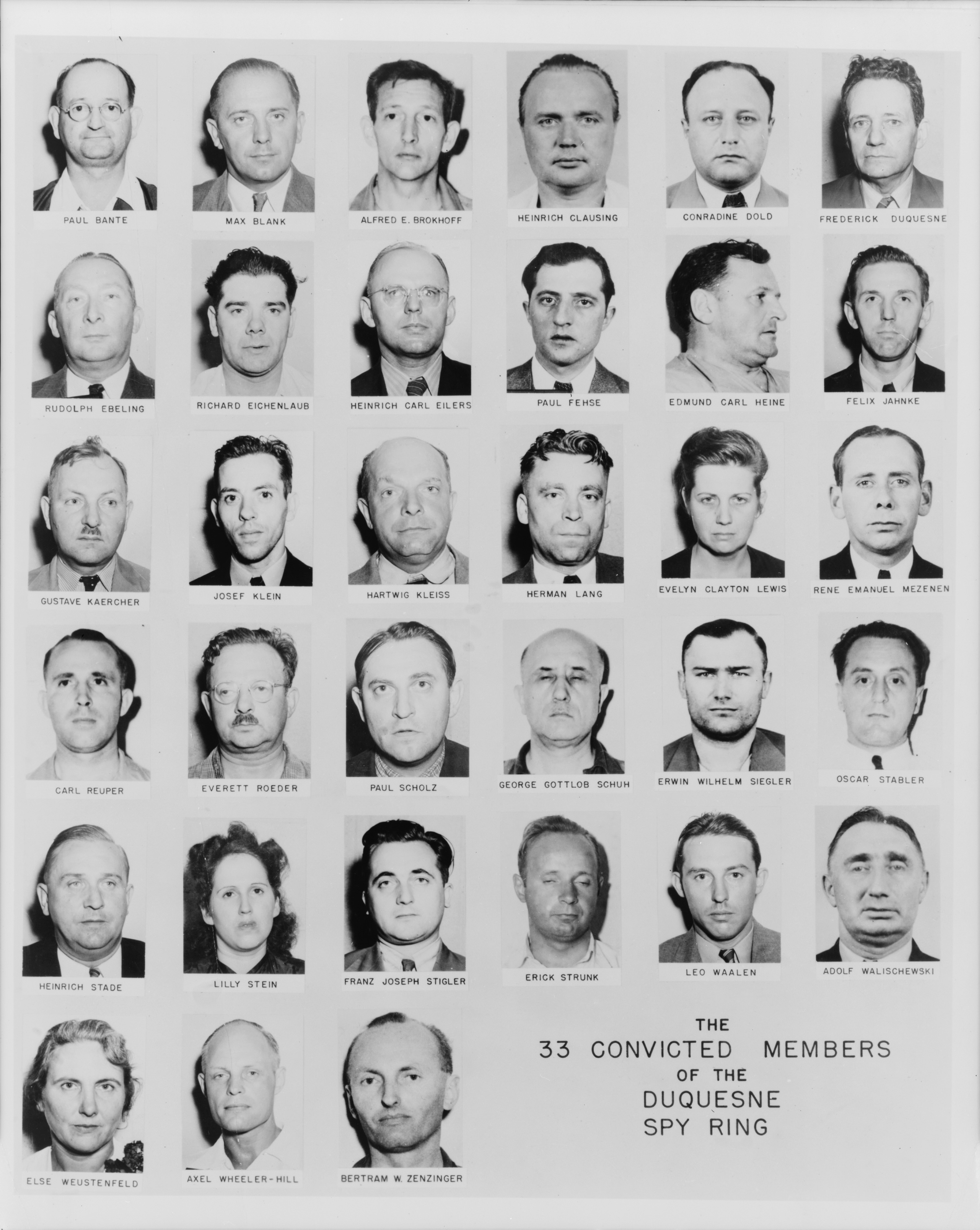
Within a week or two after the start of the war in the USA (December, 1941) all members of the Duquesne spy ring had been rounded up and sentenced. The FBI bust in this case proved to be the single largest arrest of counterintelligence agents in the United States, and a major coup for J. Edgar Hoover and his team. The 33 convicted members of the ring served over 300 years in prison. The Duke himself served 14 years before he was released for poor health reasons, passing on in 1956. He died in poverty and is buried in a Potter's Field.
(See the Interesting overview of German spy radios at this link. Another interesting document is the entire FBI detail from circa 1941, at this link on the FBI website.)
Dave, W7DGJ