








to QRZ
Latest Awards




Trials & Errors #81 (7/4/26): Egos and Eagles - 100 Year Anniversary of Norge Expedition
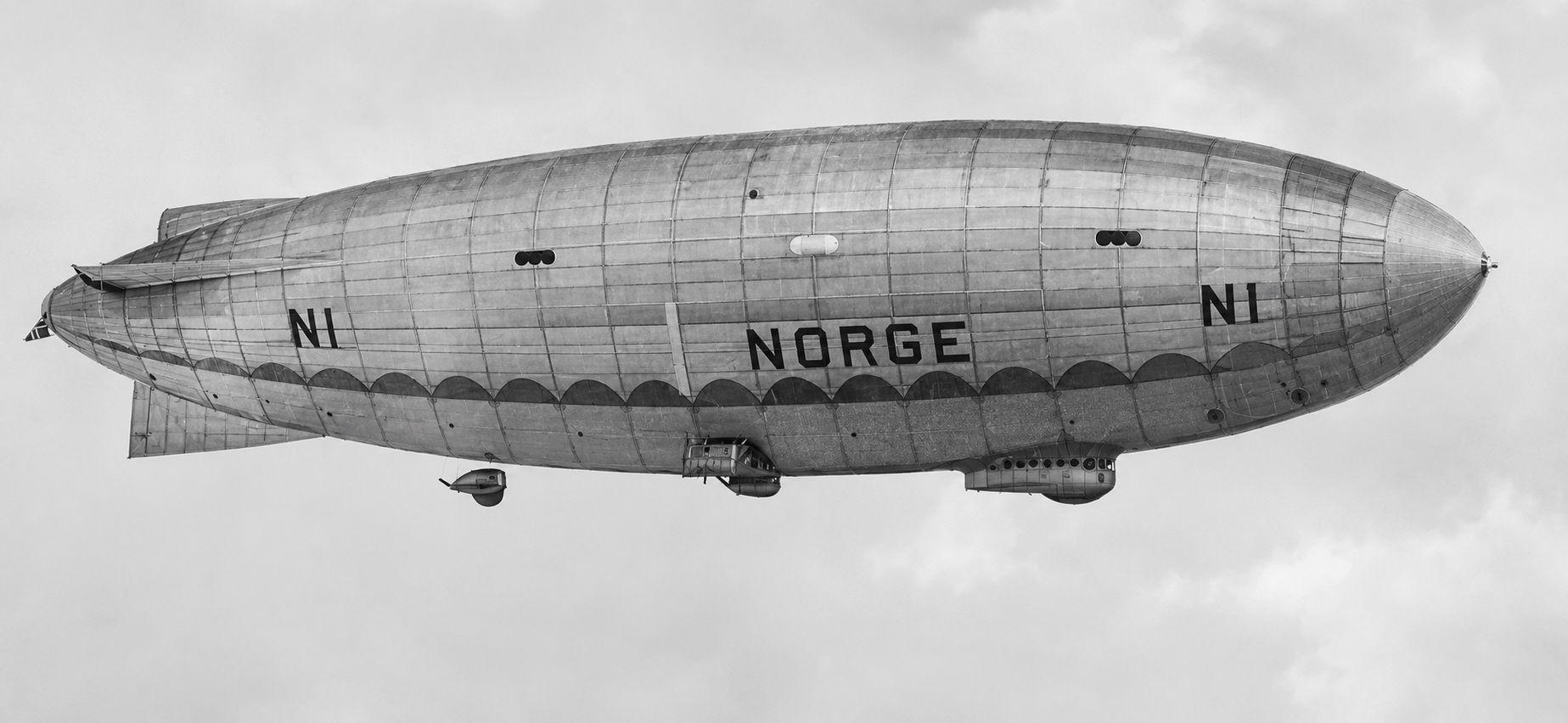
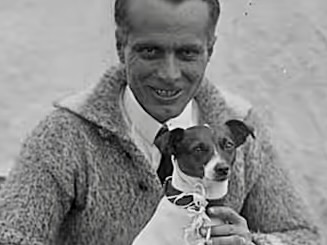
It was the early morning of May 12 (1926) and sixteen men and a dog were huddled together in a small box mounted underneath a huge dirigible airship. This unheated "cockpit" was approximately 12' by 14'. Adding to the men's discomfort, a section of the material covering the outer portion of the airship had been torn off, allowing the punishing polar winds to reach them. The small fox terrier who had joined the mission sat wrapped up in her master's flight jacket . . . the canine guest of Umberto Nobile, the Italian designer and pilot of Norge.
 The Norge, on the "Amundsen-Ellsworth-Nobile Transpolar Flight of 1926," was on a mission to fly over the North Pole. The expedition name mirrors the problem this group of adventurers had along the way . . . It was the age of great expeditions and great explorers, but also one of great egos. In this issue of Trials and Errors I will tell you more about these men, their discoveries, and how radio became an important element of their success.
Three Egos
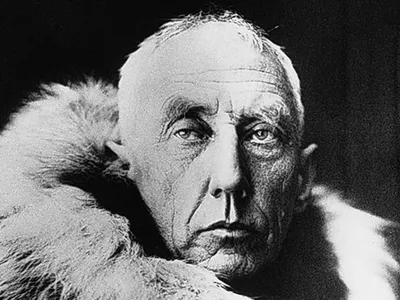
In May of 1925, a few of the best explorers of the day were discussing how one might make an air crossing of the North Pole. More than a decade earlier, Roald Amundsen (photo below), a renowned Norwegian adventurer, had made an Antarctic crossing by dog sled to claim the South Pole for Norway. This same man was the first person to sail the Northwest Passage, finding a way to connect the Atlantic and Pacific oceans by this far Northern route. Therefore, it was only natural for Amundsen to lead the discussion about being first to fly over the North Pole.
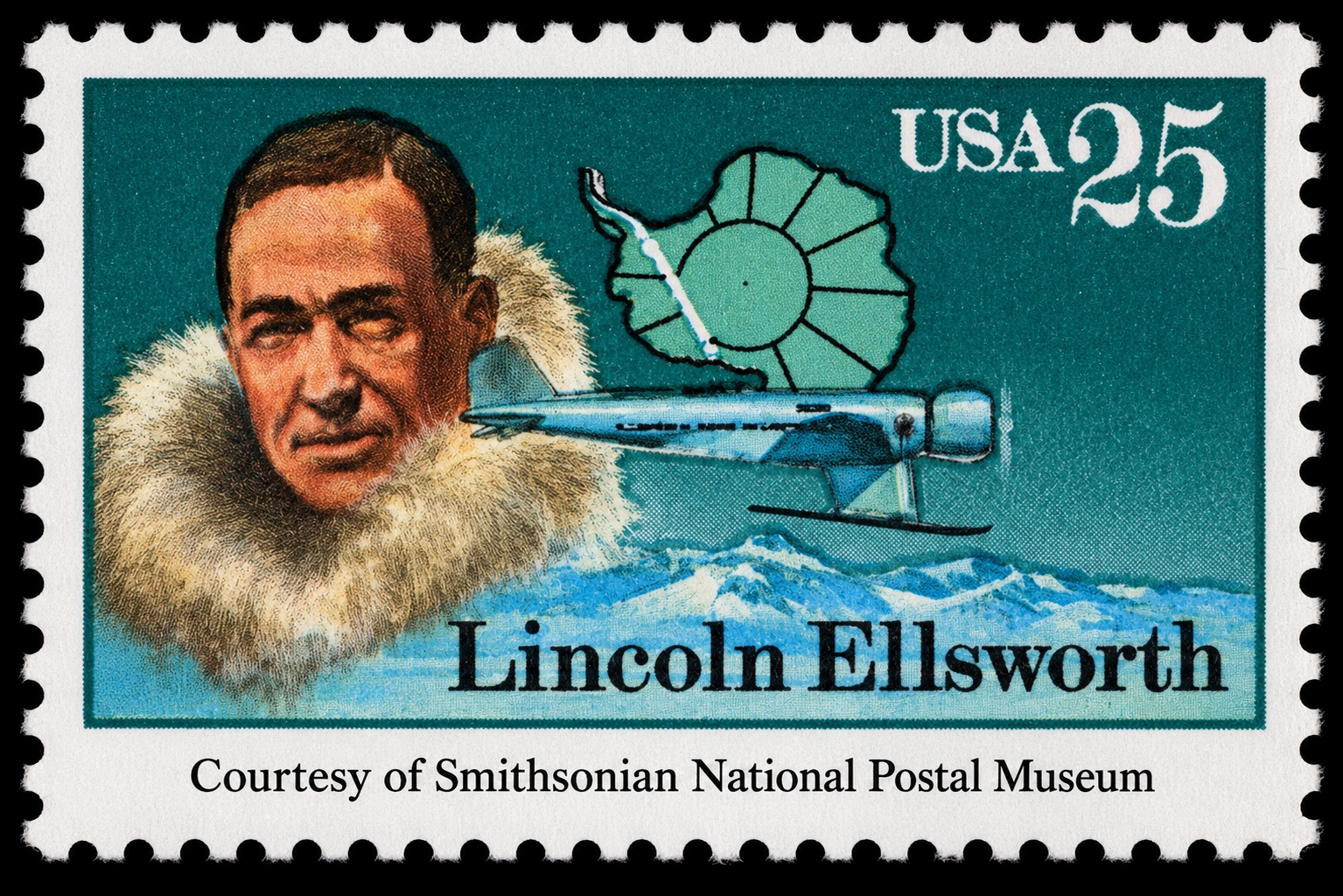
 Being practical as well, Amundsen knew that it would take considerable resources in order to make his dream a reality. He brought American adventurer Lincoln Ellsworth into the plan. While not a household name like Amundsen, Ellsworth came from a wealthy coal-mining family. He was prepared to put up $100,000 of his family's money in order to secure a position by Amundsen's side (a figure equivalent to $1.9 million USD today). However, Ellsworth sought a change in the plans before he would commit.
He wanted the group to reconsider using an airplane to fly to the Pole. It was his suggestion that the journey could be better conducted in a dirigible. These large airships would be safer, Ellsworth contended, as their engines could be repaired while aloft and they weren't as prone to crash landings. They could also carry much more weight . . . In fact, Ellsworth had a particular airship in mind when he put up his investment.
 An Italian ship, the N-1 (later renamed Norge) was acquired for the journey. The designer, Umberto Nobile (photo with dog above) insisted that he be included as Pilot for the expedition -- the first of Nobile's many requests. He also insisted that Titina join the mission. While no one wanted a dog in the cramped cabin, there was no time to argue as the team needed desperately to acquire the Norge. After all, there was competiton as it was rumored that American explorer Richard Byrd had his eyes on the prize as well.
The Radio
Shortly before their departure from Svalbard (far Northwestern Norway) the news reached the team that Byrd had flown by airplane to the pole and made the return flight successfully. Despite this discouraging news, the Norge crew decided to press on, and luckily so . . . Byrd's flight was later almost universally discredited due to the mathematics of his airspeed and certain discrepancies in the flight log.
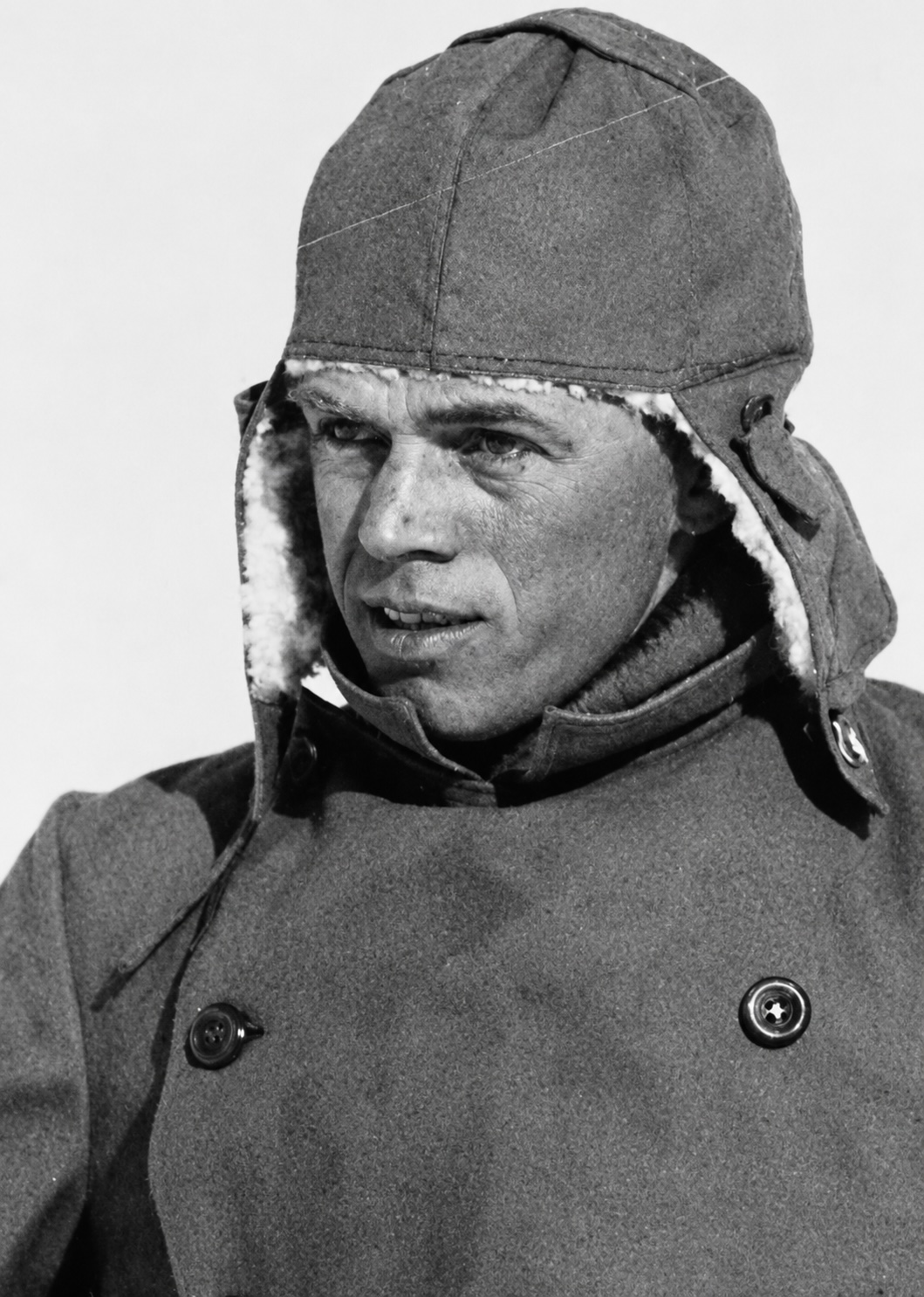
There were two radio operators along on the airship team: Birger Gottwaldt, Chief Operator, and Fridtjof Storm-Johnsen, Telegrapher (photo below). The transmitter put out 200 watts to the antenna, a 300 ft. long wire dangling from the airship. The Marconi Company had constructed this radio specifically for the trip, and it was mounted open-faced in a breadboard-style arrangement so that adjustments or component replacements could be made even by fingers that were half-frozen. It transmitted between the 600 and 1500 meter bands, and it was expected to have a range of 600 to 1300 miles. Regular communication took place between Gottwaldt or Storm-Johnsen and stations in both Northern Europe and at sea, but they were sorely disappointed that they could not seem to communicate with stations in Alaska -- such as the powerful one in Nome. The problems were blamed on very different ionospheric conditions at the Pole and perhaps on their low altitude as they closed in on their target.
Along with the unique radio, there was a specially built goniometer (direction finder) supplied by Marconi as well, which utilized radial antennas built into the hull of the ship. It worked flawlessly once locked into a known signal in order to keep the ship on course (and later, to prove that they had actually reached the North Pole.) Perhaps a reader will describe in the forum how a direction finder of this sort might work. [DGJ presumes it would be much like the signal finding used in a ham radio Fox Hunt.]
Here's how radio operator Gottwaldt described it in a wireless transmission picked up by the New York Times of the day: "The direction finder consists of two double-turned loops placed at right angles to each other around the envelope of the airship, each loop being at an angle of forty-five degrees to the keel of the ship, making a ninety-degree angle between them. They are connected to a Marconi direction finder and connected to a radio goniometer and search coil, which are in turn connected to a tuning circuit which works on wave lengths from 1,000 to 20,000 meters."
 Reaching the Pole
When the Norge instruments and the goniometer told them that they were circling the North Pole, the airship dropped close to the ice and the men onboard attached their country's flags to heavy metal spears that would fall and penetrate the ice. Amundsen and Ellsworth dropped the agreed-upon Norway and USA flags. Nobile took out an unsanctioned (huge) Italian flag and dropped it along with a flag of the City of Milan, which infuriated the others. He also dropped religious momentos and a large oak cross given to him by the pope. Amundsen later stated his belief that Nobile had turned the North Pole into a "circus wagon" beneath them.
Amundsen's sarcasm was just the tip of the iceberg in a back-and-forth exchange that went on for months (years) between Norway and Musselini's fascist Italy. Each country claimed credit for leading the expedition. America had it's own claims at the time, primarily focused on the now-discredited Byrd flight to the pole just a few days earlier.
 An Icey Trip and Dicey Landing
Their radio problems highlighted an even bigger concern. Ice had built up on the wire antenna hanging off the fuselage, and as Storm-Johnsen knocked it off the wire he saw that the entire airship was covered with a thick layer. At least a ton of additional weight had attached itself to the airship, requiring additional fuel and a change of altitude to try and clear it.
It was doubtful that the huge airship could make it to Nome, so as they traveled along the Behring Strait they attempted to spot a safe landing spot. The ship passed over several small native villages and those entire populations came out to watch -- in one, every dog in the encampment took off running into the ice pack out of fear.
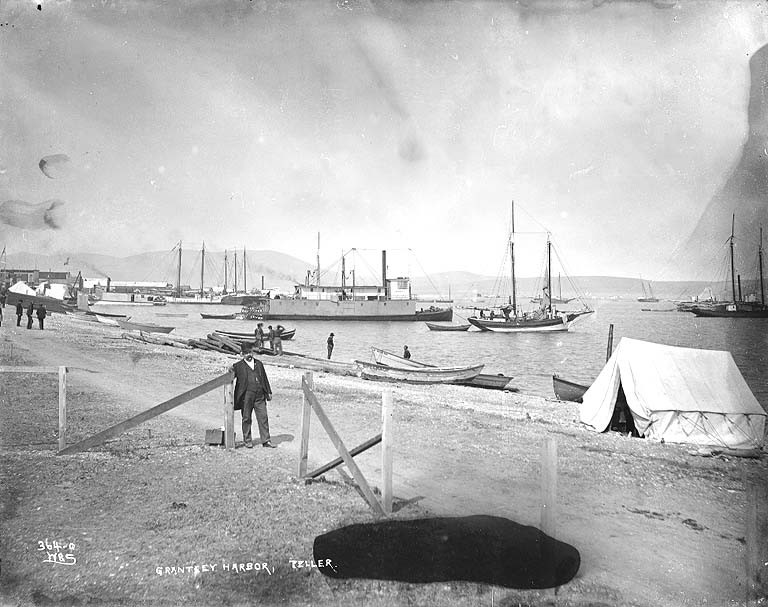
FInally, they spotted Teller, Alaska (see photo). It had a beautiful frozen harbor, and as they set the dirigible down on the ice they were granted a few minutes of reduced wind. All sixteen men exited the Norge safely and enjoyed a wonderful celebratory meal. One of their last wireless messages to the media tells it better than I can:
"On the last part of the flight the crew had suffered much from the cold. The raw fog penetrated cabin, keel and engines after we passed the ice pole . . . our coffee and tea in the thermos bottles got cold twenty-four hours after we had left Svalbard and froze. Our egg sandwiches and meat cakes also froze. The only food we had was biscuits and chocolate. It was not possible to warm anything, the danger of lighting the hydrogen gas in the balloon was too great. How good our first warm meal in Teller tasted to the sixteen tired and hungry men, prepared by the friendly inhabitants immediately after our landing!"