







to QRZ
Latest Awards




Trials & Errors #78: A Banner Year for Ham Radio
1957 was a golden year for ham radio. If there are any operators out there who might have been putting out a signal in 1957, they'll know what I mean. It was - literally - a year without a peer. It was a time when QRP radios were reaching around the world, and when you could (for days in a row, over many months) tune into 6-meters and catch just about anyone, anywhere. What a remarkable time for the hobby.
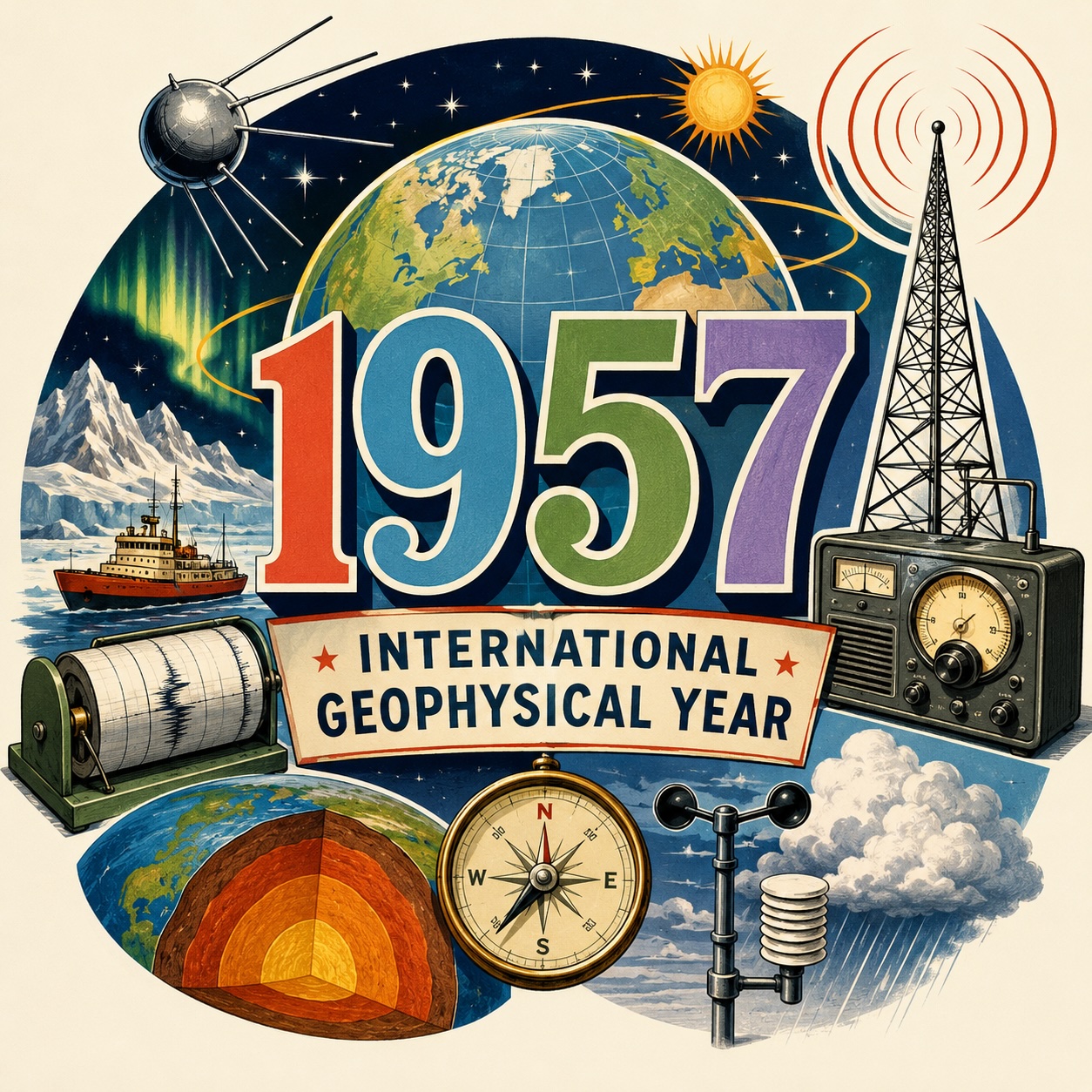 1957 was an amazing year in general for the sciences and technology. There were so many collaborations going on at the same time that scientists gave it a special name . . . it was the International Geophysical Year, and the kind of openness and sharing the world experienced in 1957 has never been repeated. In today's fractured world full of conflicts, I doubt we'd ever see this happening again. It's hard enough to even find cooperation within one country.
A Period of Exponential Growth for Amateur Radio
I was just a sprout, so I can't lay a claim to any remarkable radio feats at the time. However, my Dad had purchased a book meant for boys and young adults called "SOS at Midnight," by Walker Tompkins and it had a solid impact on my interest in radio . . . it took me into AM DXing. It's far out of print now, but it was published first in 1957 and then again multiple times through 1985 (by the ARRL). Radio must have seen some serious growth due to that book, because I remember it to this day. It was about young Tommy Rockford [K6ATX - the author's call sign] applying his knowledge of radio and ham gear to get out of a dangerous jam with local California gangsters. While I didn't get on the air as a ham until the 60's, I remember lying in bed and listening to AM Radio stations that would drift in from all over the country and sometimes Canada and Mexico. That soon moved to a Shortwave radio and serous SWL action.
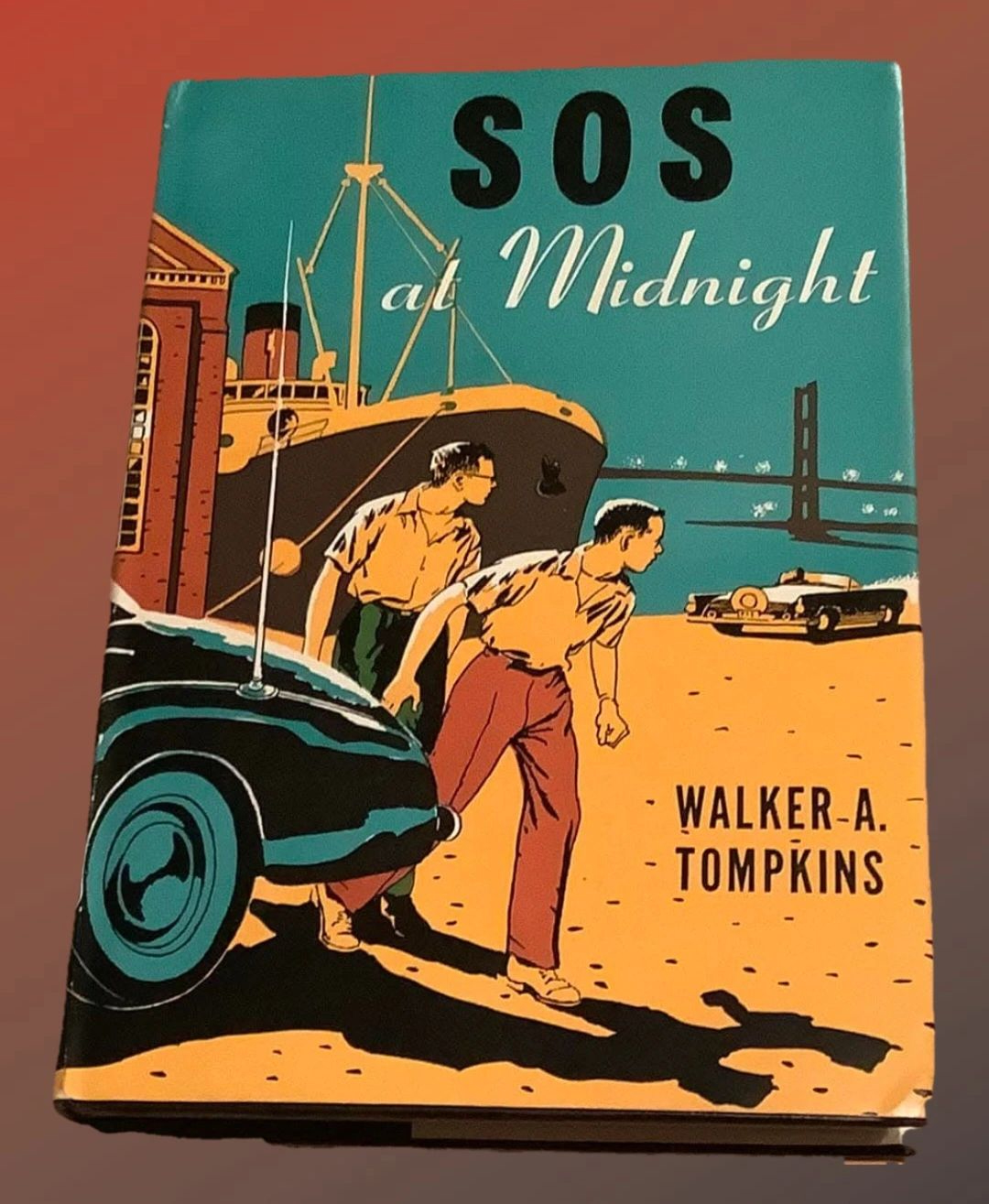 Books like this one, along with a few Hardy Boys mysteries and an earlier series called Radio Boys, really stoked the fire for young men and radio. Sadly, I'd bet that the male-dominated focus of these young adult publications helped make the radio hobby into the "guy's thing" it is seen as today. (Congrats to those young women who have worked hard to bust that stereotype.)
What Made 1957 Special
The International Geophysical Year (IGY), which really lasted about 18 months, showed us how much we could accomplish as the human race if we were to work together. Unfortunately, it ended by launching the space race (which took the Cold War to new heights of nationalism and an East vs. West mentality). To me, it's remarkable that 1957's level of cooperation was achieved at all, as it began during the Cold War. (Make sure you listen to the great Donald Fagen music soundtrack linked at the end of this column.)
For hams, it was a blessing because 1957 fell right at the height of an amazing sunspot cycle [#19] which saw incredible numbers in comparison to previous cycles. It was absolutely the perfect time to be an amateur radio operator, and all over the world hams warmed up their tubes and put up new antennas. Amazing reports were made of QSO's on all bands.
67 nations around the world signed on to an agreement to cooperate and share research into the Earth Sciences, including all the major disciplines around radio. It also brought nations together in Antarctica to build and staff research stations. Hams of that era (and hams today) appreciated adding Antarctica to the roster of continents that were often reachable via radio in the excellent conditions of the day. (Today, I can put up a WSPR transmitter and regularly see my tiny signal reaching the Antarctic.)
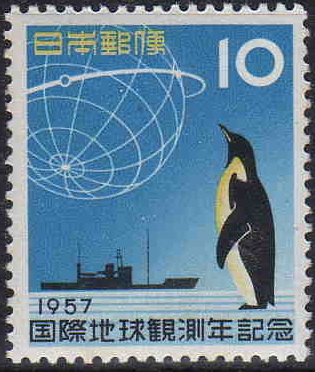 As sometimes happens, however, the collaboration during the IGY quickly turned into a land grab. At the South Pole, seven nations proclaimed ownership of large chunks of land until a 1959 resolution brought the continent back into the realm of peace and cooperation.
Major Accomplishments During the International Geophysical Year
There were fourteen Earth science disciplines involved, which included major categories such as gravity, ionospheric physics, precision mapping, meteorology, oceanography, nuclear radiation, seismology, solar activity and rockets/satellites. The initiative to form these collaborations came as a result of the sunspot cycle #19 which was recognized by non-hams as well due to it's impact on the planet.
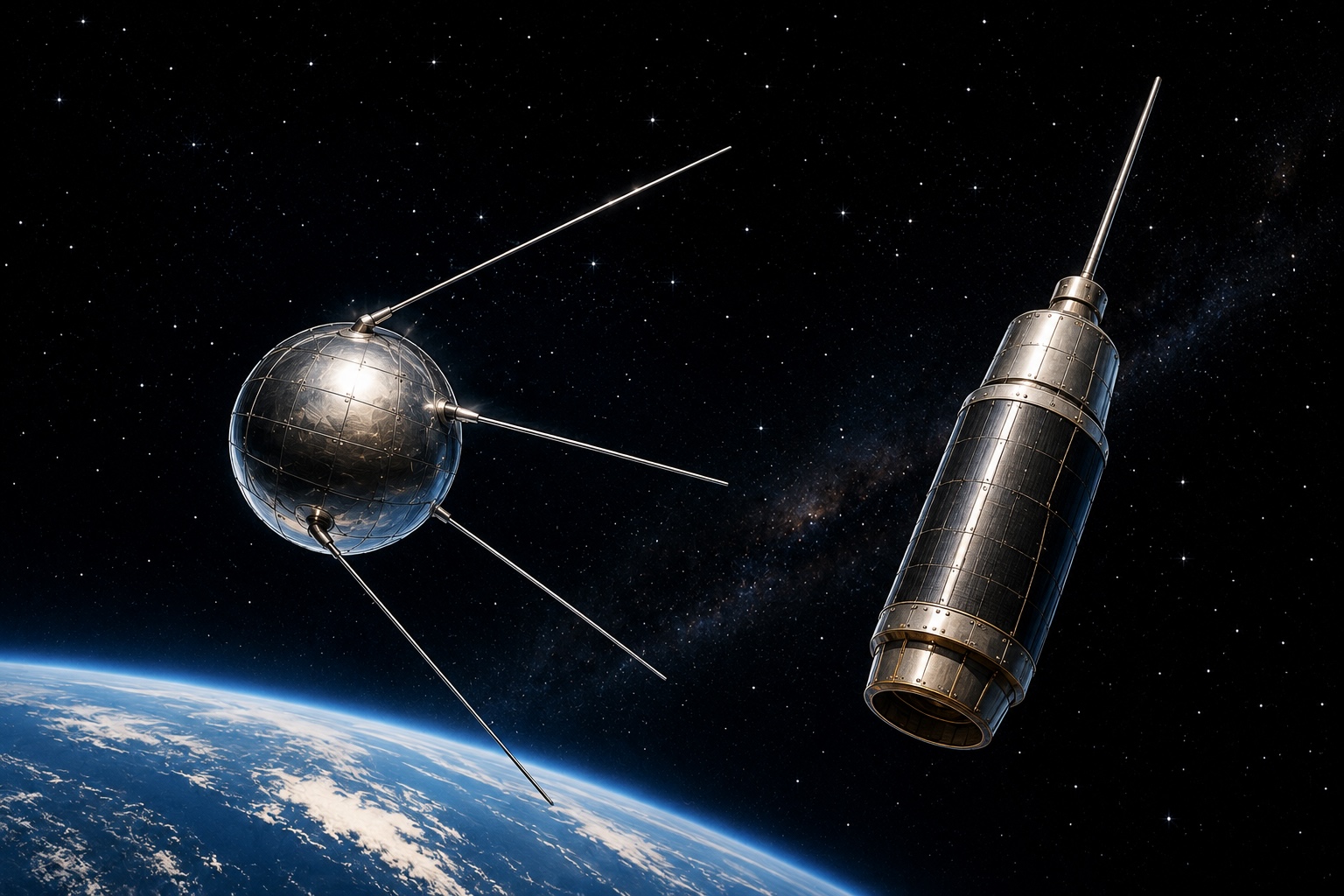
- The first Soviet artificial satellite (Sputnik 1) went into space in October of 1957, followed by Sputnik 2 and shortly afterward Explorer 1. America had the honor of making the first grand discovery of the space age when the Van Allen Radiation Belts were identified by US scientist James Van Allen. These are two or three donut shaped zones of dangerous high-emergy charged particles. They have a protective effect for the planet but also cause significant risks to unshielded satellites or astronauts as they pass through them. OSCAR, the first ham radio satellite, went up a few years after Explorer, and allowed hams to track propagation by listening to the morse "Hi" signal that OSCAR sent back to Earth.
- Amateur radio operators had been experimenting with Single Sideband mode (SSB) in the late 1940s but it wasn't until 1957 when the Collins KWM-1 was introduced. 1957 saw a huge surge of interest in the mode, and although many were still operating on AM until the early 1960s, SSB showed its true promise with that new radio appearing during the International Geophysical Year.
 - Great strides were made in mapping the planet and our oceans. The British–American survey of the Atlantic discovered the full length of the mid-Atlantic ridges - another major discovery during the IGY. This huge undersea mountain range was important for our understanding of oceans as it proved that the ocean floor was not "featureless" as some believed.
- Among a host of other developments were the first of the large, computerized databanks that were set up and shared by all 67 countries signed up for the IGY. These were the ancestors of today's data centers, with massive tape drives holding the world's discoveries from 1957.
The Sony TR-63
While the Collins radio mentioned above surely excited ham radio operators, it was the release of a much smaller and less expensive radio in 1957 that really changed society. 1957 was the year of the introduction of the Sony TR-63 transistor radio. It was the dawn of a new age of small, tubeless radios. If you were around in those days, you'll remember that Christmas 1957 was the time when all the cool kids showed up with their tiny transistor radios -- in my case, tuned into WJW (Cleveland) for all the latest Rock 'n Roll hits. And Clearasil commercials! 73 for now, Dave W7DGJ
PS - Added Later - Tom [N1YR] suggested this great Donald Fagen soundtrack to the column above, and it's REALLY called "I.G.Y."