


to QRZ
Latest Awards




Trials & Errors #77 (04/18/26) - Radio Heroes on the International Pacific Highway
Radio Heroes on the International Pacific Highway
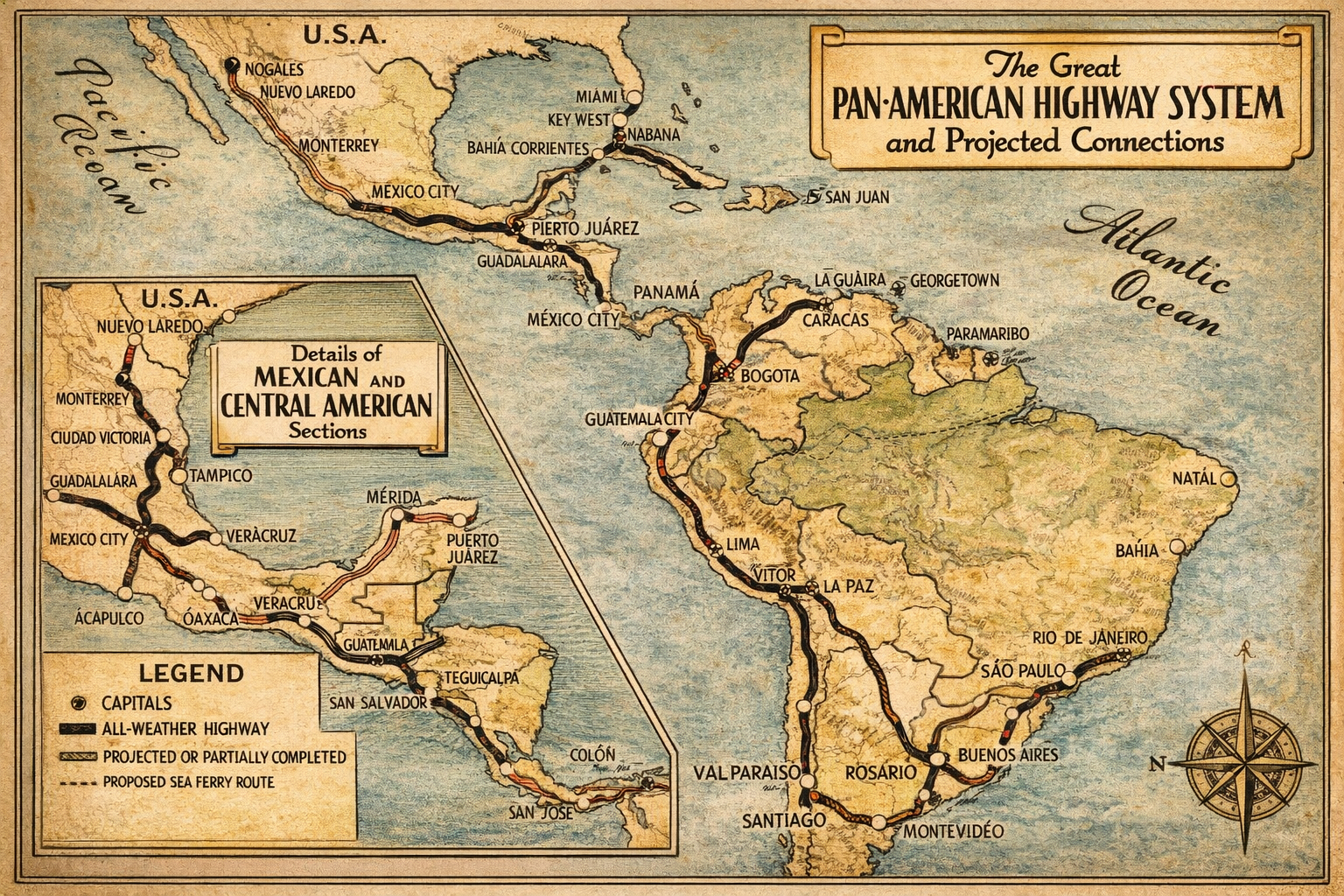 Before journalism became a contested career choice, there were famous men and women who took their job of keeping the public informed quite seriously. In my journalism classes, I remember reading about Harry Carr. Carr was a famous reporter of the early 20th century who traveled the world to tell stories of technology, culture, and revolution. Working for the Los Angeles Times, Carr covered World War I and many developments afterward. But there was one trip that inspired him more than any other . . . exploring the projected road from Alaska to the tip of South America. A great road trip he took on one major section of that highway inspired one of his only books (Old Mother Mexico). While that road still isn't totally complete, this Pathfinder Expedition as it was called got the American public interested in amateur radio (and road travel) through daily bulletins that showed up on the front page of the Times and associated newspapers.
Like many of today's DXPeditions, Pathfinder involved money, radios, and guts.
The Long Journey Out of Los Angeles
By 1930 the automobile industry had grown significantly. It was also a time when consumerism and marketing were booming . . . pushing autos had become big business. The idea of a road that would extend from Fairbanks, Alaska, and down the West coast of North and South America intrigued not only the car companies, but the American public as well. Enthusiasts in the Automobile Club of Southern California put money into the idea of a "mother road" South, collaborating with the Los Angeles Times who offered up Harry Carr as one of the men who would scout this first major leg of this future "International Pacific Highway" from LA to Mexico City and beyond.
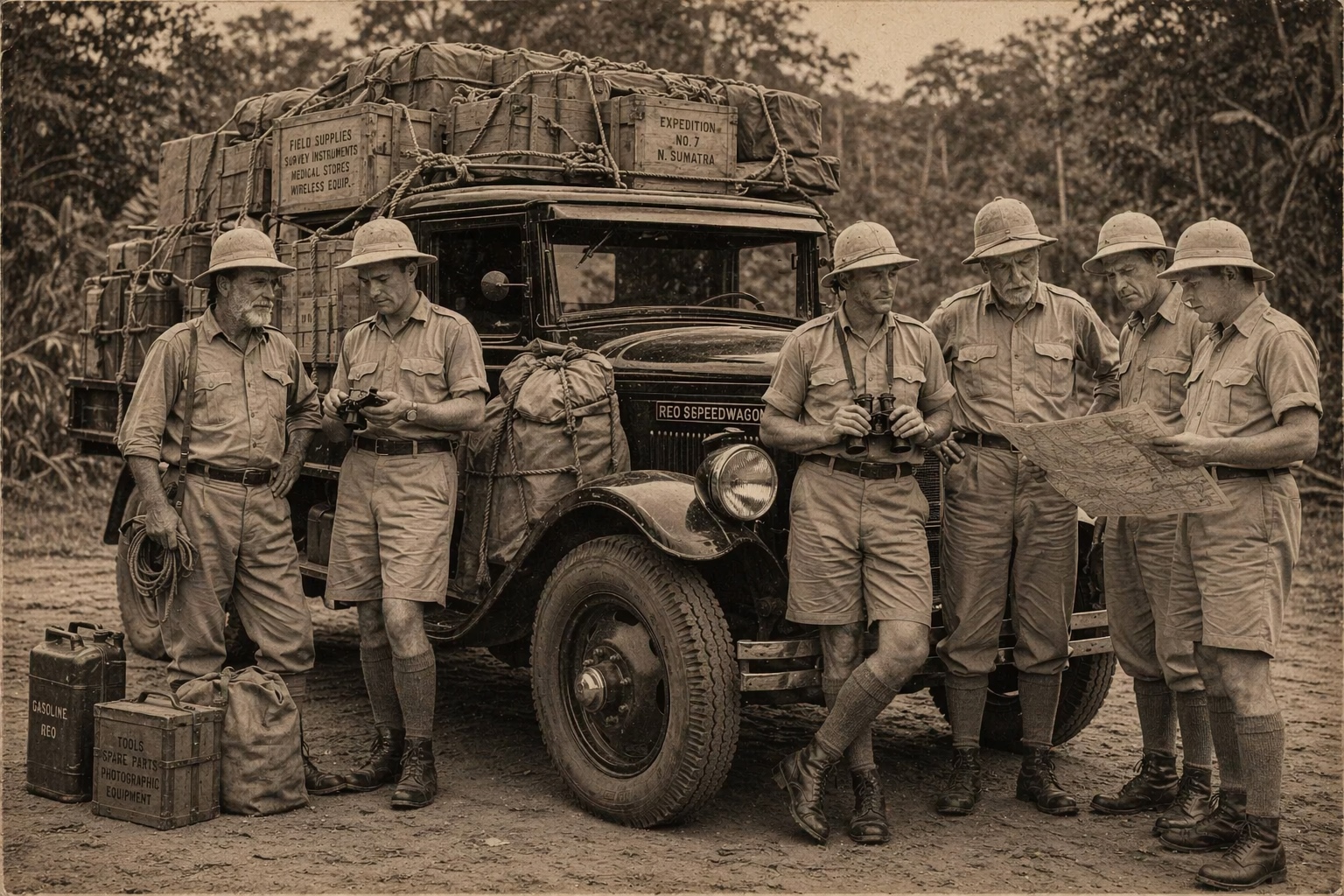
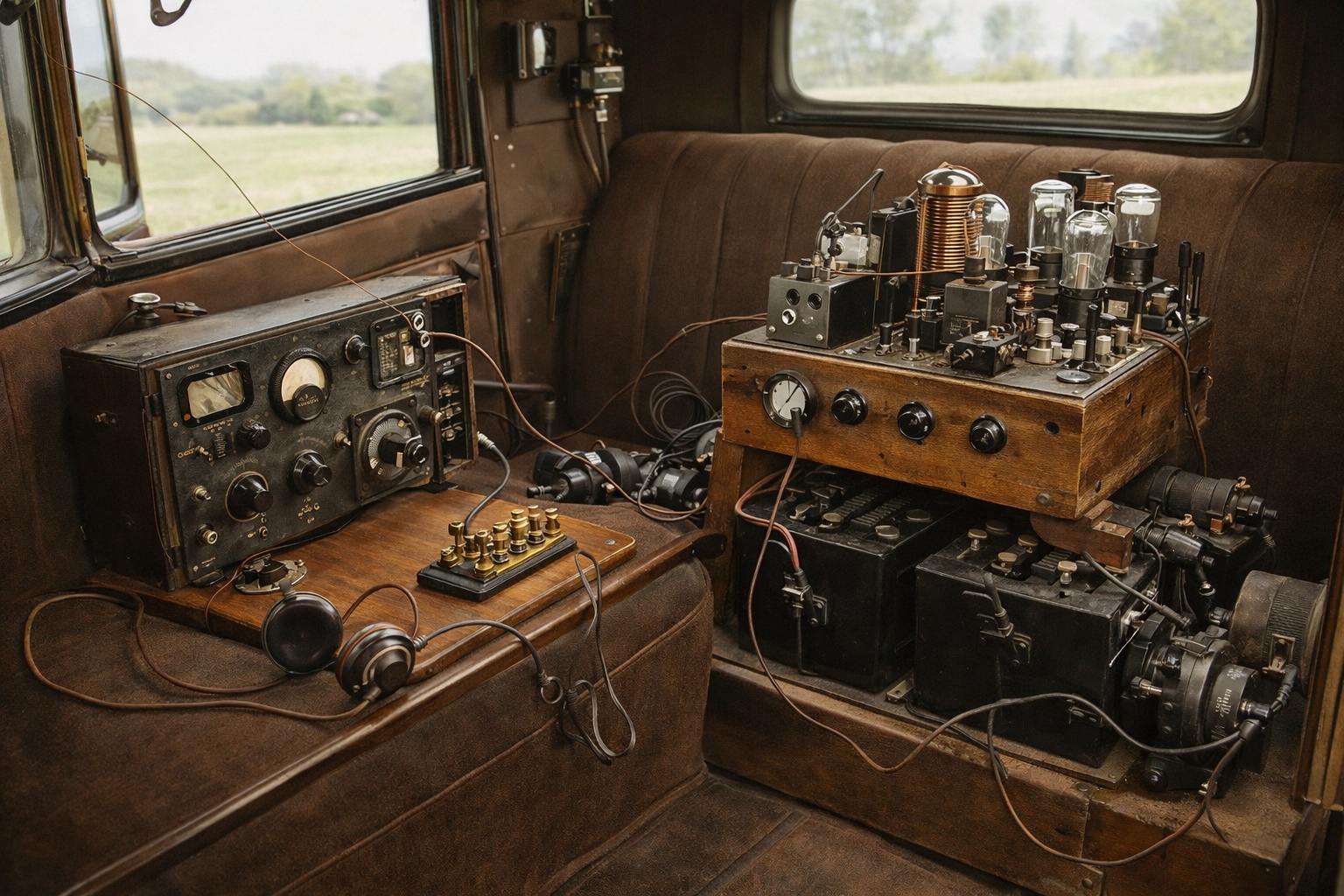 In order to file his stories from the road and keep the public informed on a daily basis, Carr proposed that amateur radio become a part of the expedition. Five vehicles were lined up for the trip: three custom built 8-cylinder REO Speed Wagons specially reinforced for the journey, as well as two Ford Model A passenger cars modified with truck shocks. One of those Model A's was dedicated exclusively to radio gear.
LA-area ham, Bert Sandham [W6EQF/W6LIP] was given only ten days to assemble the portable station. (Unable to get permission for a photo of this radio, I asked ChatGPT to recreate it, above. A photo of Sandham is included in the mention of this journey from the excellent book, "The World of Ham Radio, 1901-1950" by Richard Bartlett.) While there had been automotive portable radios (such as the one in my image) established previously, Sandham did prove to be a very creative fellow in his radio design. He built the expedition rig to exacting standards in a highly rugged case taking up most of the rear of his Model A, in addition to loading the vehicles with spare parts, tubes and sensitive equipment in containers he built to protect their contents. He guessed correctly that the expedition would encounter horrendous humidity, insects, and great shock/vibrations on the "road" to points South.
A second-shift operator, Mr. Herb Walmsley [W6XCH/W6DZL] was accredited as a radio hero by Carr in his writings, especially when facing equipment breakdowns or tropical static attacks that made the transmission of a one-page daily report into something of a CW marathon. You likely know how long it can take to get a short CW QSO completed when dealing with bad conditions . . . now, take that same QRN and try getting across 500-1000 words accurately! The Los Angeles Times set up their own dedicated radio shack at headquarters in order to deal with the Carr reports along the way, but transmission often relied on amateurs in other locations to do relays.
While there isn't a great deal of information on the specific radio designs these hams used, it likely included a three-tube receiver much like the Pilot Super Wasp or similar designs from the ARRL Handbook of that era. UX-210 (Type 10) or UX-222 screen grid tubes were probable components (state-of-the-art at that time). Sandham and Walmsley carried with them fourteen 45-volt "B series" batteries, along with wire antennas wound on spools for two different radio bands. Sandham generally put up the 130 foot wire, which was never quite as easy as installing a wire on our backyard trees as we do today.
 Antennas, Jungles, and the Barranca de Beltran
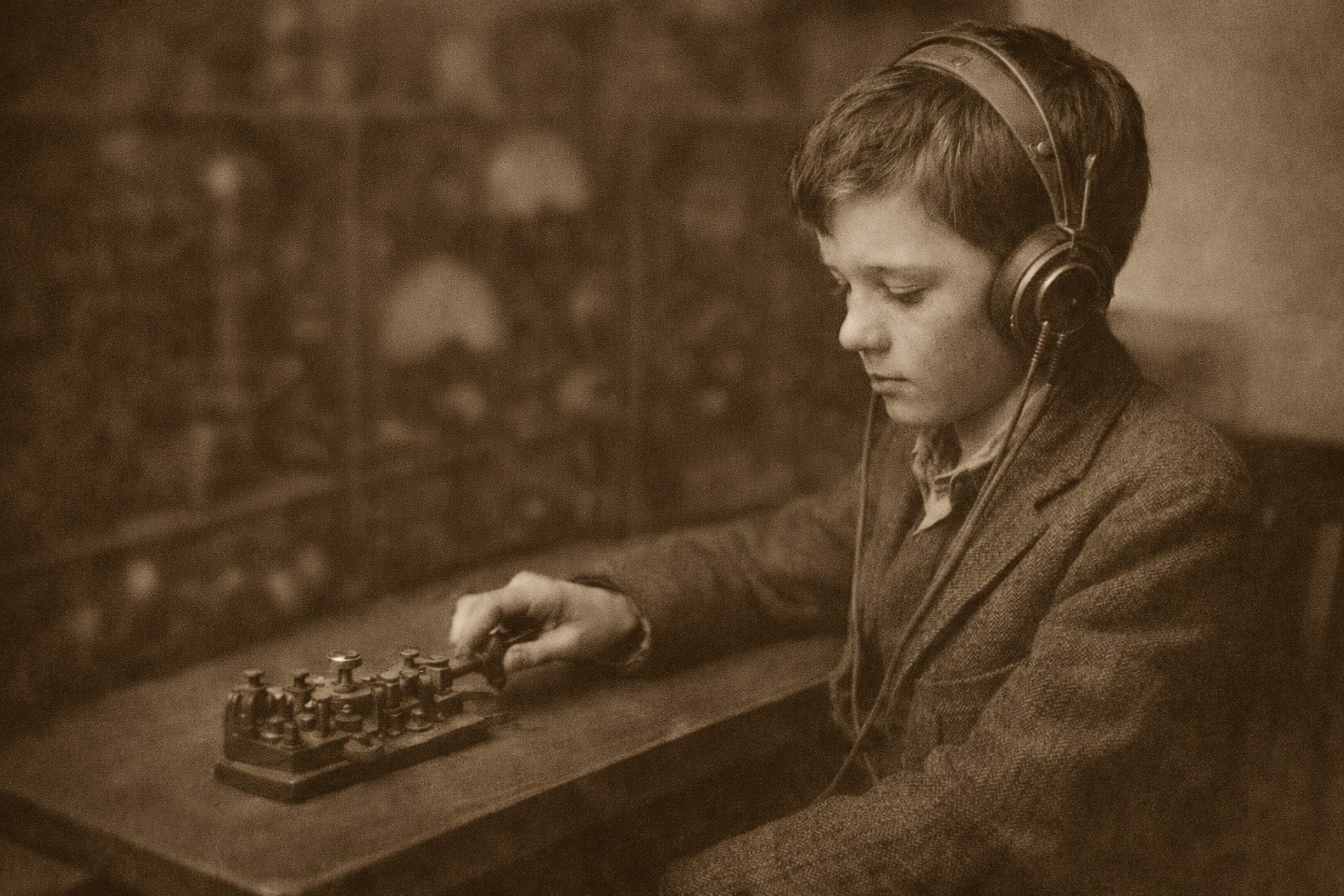
It was March 15, 1930, when the caravan took off, heading towards Nogales, Arizona where a road branched off into Mexico. It was tough slogging through the mud once they entered Mexico. At first, things did not go well for the hams as they were not able to connect with the Times station. However, as the mysteries of propagation played out, a "boy ham" in Ohio was able to pick them up and relay back to LA, as well as a military operator in Honolulu. The job got done, and Carr filed his first reports for publication. Interest was built this way in these nine men and their radios.
 One of the never-ending issues that Carr wrote about was the daily raising of the antenna. Sandham brought along a mast which would be assembled daily for the required communication, but the highest location that the crew could find would often be on top of poorly constructed roofs in small towns they stopped at along the way. The hams were often the first to meet the townspeople as a result, and many of these folks had never seen a radio -- some had never seen a car. Getting that wire up where it should have been often proved very difficult. This part of the journey was very familiar to me, as I live in the desert and the tallest objects in any direction are the Saguaro cactus -- certainly not conducive to easy attachment of wire antennas.
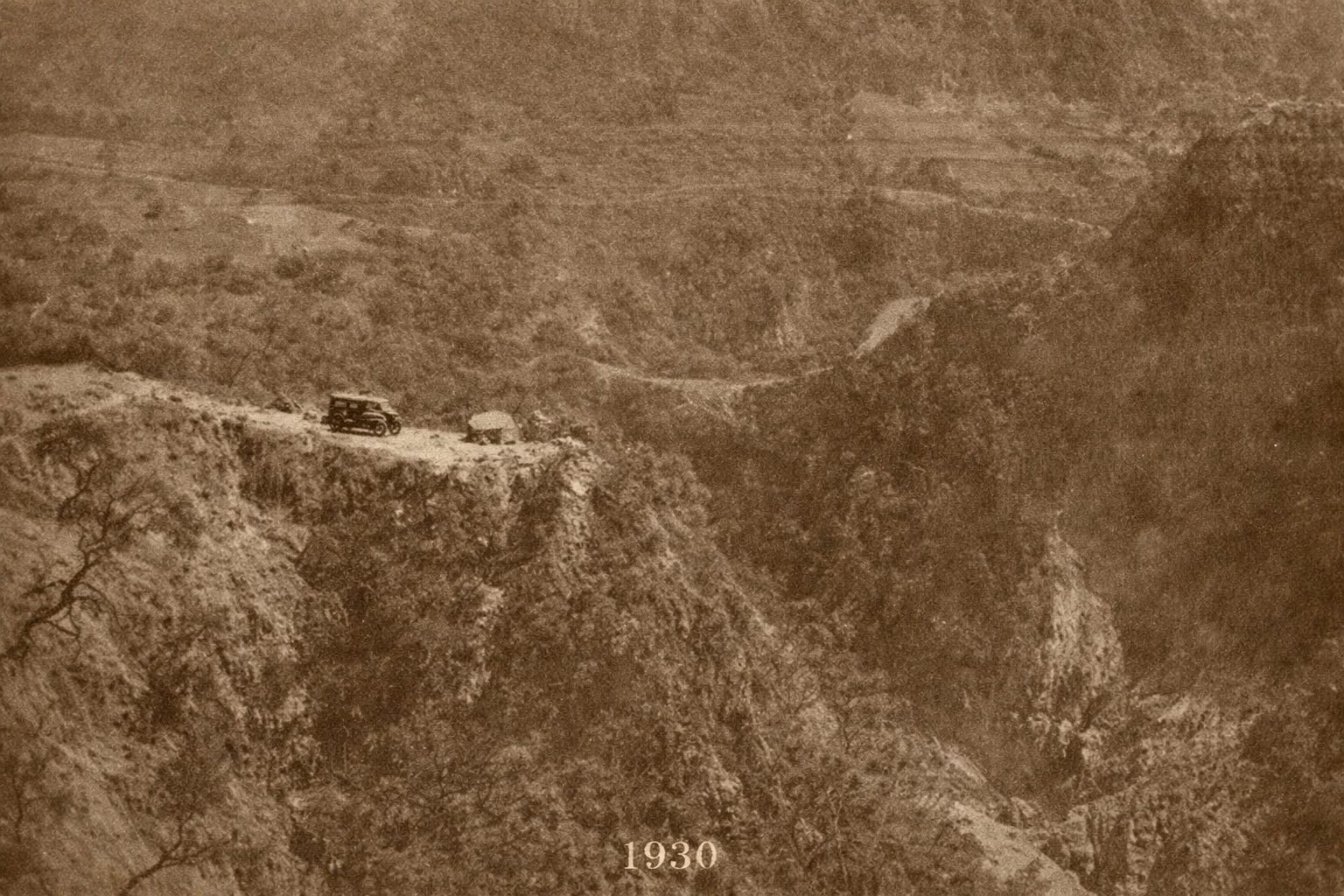 Traveling South through the small towns of Sonora proved to be the easiest part of the journey, as they would later face jungle and canyonlands. A "barranco" is a ravine, but that doesn't sound as imposing as they actually looked to these men. Just imagine how they felt coming upon the Barranca de Beltran, one of the most imposing gorges in all of Mexico! (See photo). Let's say you're into four-wheeling and jeeping today with your radio . . . how would you get past the Barranca de Beltran? Now, imagine the difficulties this group of adventurers faced. They had to build makeshift bridges and partially disassemble their vehicles to winch them up the sides of the canyon walls. On some days, getting a half mile was a big accomplishment. Only two vehicles made it past this point, with the radio car being one of them. The others were put on a rail car and sent to Mexico City. Had the men given up? Not really . . . most of them signed up again the following year for another leg of the journey South on this "mother" road. Was it a success? Yes -- the Pathfinder expedition lay the groundwork for the diplomatic discussions that took place immediately afterwards with all the involved governments about the building out of a truly International Pacific Highway.
And, along with that benefit, Amateur radio came out shining. Harry Carr wrote with high praise for the amateur radio community, describing how the expedition relied on a network of hobbyists along the route to relay messages when their own signals were weak. "Whenever we stopped, a local ham would often emerge from the brush and offer assistance." These radio heroes truly shined a light on amateur radio.
Thanks for reading and 73 for now,
Dave, W7DGJ