


to QRZ
Latest Awards


- OE6HLF 2026-09-10
- IH9/IT9JUI 2026-09-10
- RN3GJ 2026-09-10
- KE2ECK 2026-09-10




Trials & Errors #83 (8/7/26): In Celebration of ARES - Akerberg and the Ohio Floods
 It was Easter Sunday, March 23rd, 1913, and the rain just kept on coming in the central Ohio valley. It was the storm of the century for Columbus and for many small towns downstream. Years later, I lived in nearby Athens while attending Ohio University . . . I remember seeing signs on buildings to honor the lives lost and the more than fifty homes and campus buildings that were literally swept away as the downpour continued for days. Markers showed the Hocking River high points, at more than 10 feet above any previous high-water mark. But, as in all tragedies, there were stories of heros who made a difference -- and in this case one of them was a young amateur radio operator.
In a recent ARRL Letter, it was announced that the league has a new award -- one called "The Herbert V. Akerberg Award for Outstanding Service to Emergency Communications." It is good to see that the League will reach back this far because Ackerberg certainly deserves the mention. When I was unable to find more detail on the ARRL website, I started researching Akerberg and found he was the first USA radio operator to use his station to solicit help from inside a civil emergency.
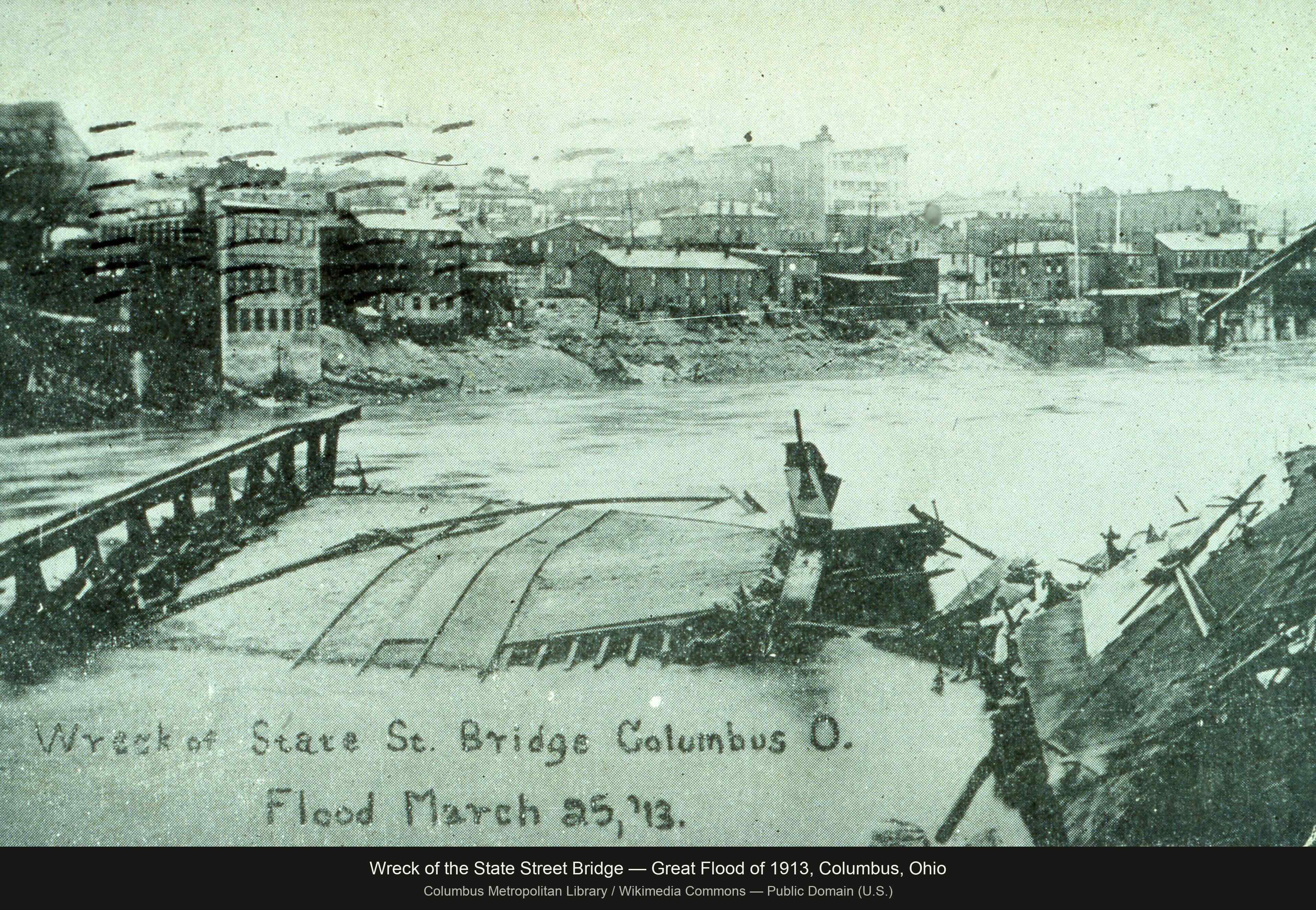 The Lead Up to a Massive Hit on Ohio
It was on Good Friday, March 21st, that the region first started experiencing record severe weather. In Toledo, southwesterly winds reached over 80 mph as the first licks of rain began to hit the region. Columbus lies in central Ohio, along the Scioto River near where it meets the Olentangy River. The city, located at this strategic meeting point, has plenty of low-lying residential areas that were later a problem, as well as other neighborhoods which are up on hills and which escaped the worst of it. While parts of the region are rolling plains, the southern and easterly sections of Ohio feature rugged hills with deep valleys. They lead into the foothills of the Appalachian Plateau. I've always considered these rolling hills to be a part of Ohio's great beauty.
The disaster which followed the first signs of trouble in Toledo eventually took more than 900 lives across fifteen states, with many of those deaths the result of ten tornadoes that touched down to the West of Ohio -- all a part of the same storm system. When the really heavy rains hit, the ground was already saturated. Unfortunately, a Southwest-to-Northeast band of low-pressure systems stalled over Ohio as it hit a high pressure front. On Easter Sunday, what had been a steady rain worsened as the moisture froze and the region experienced an ice storm that continued steadily for two more days -- one that took out buildings and bridges.
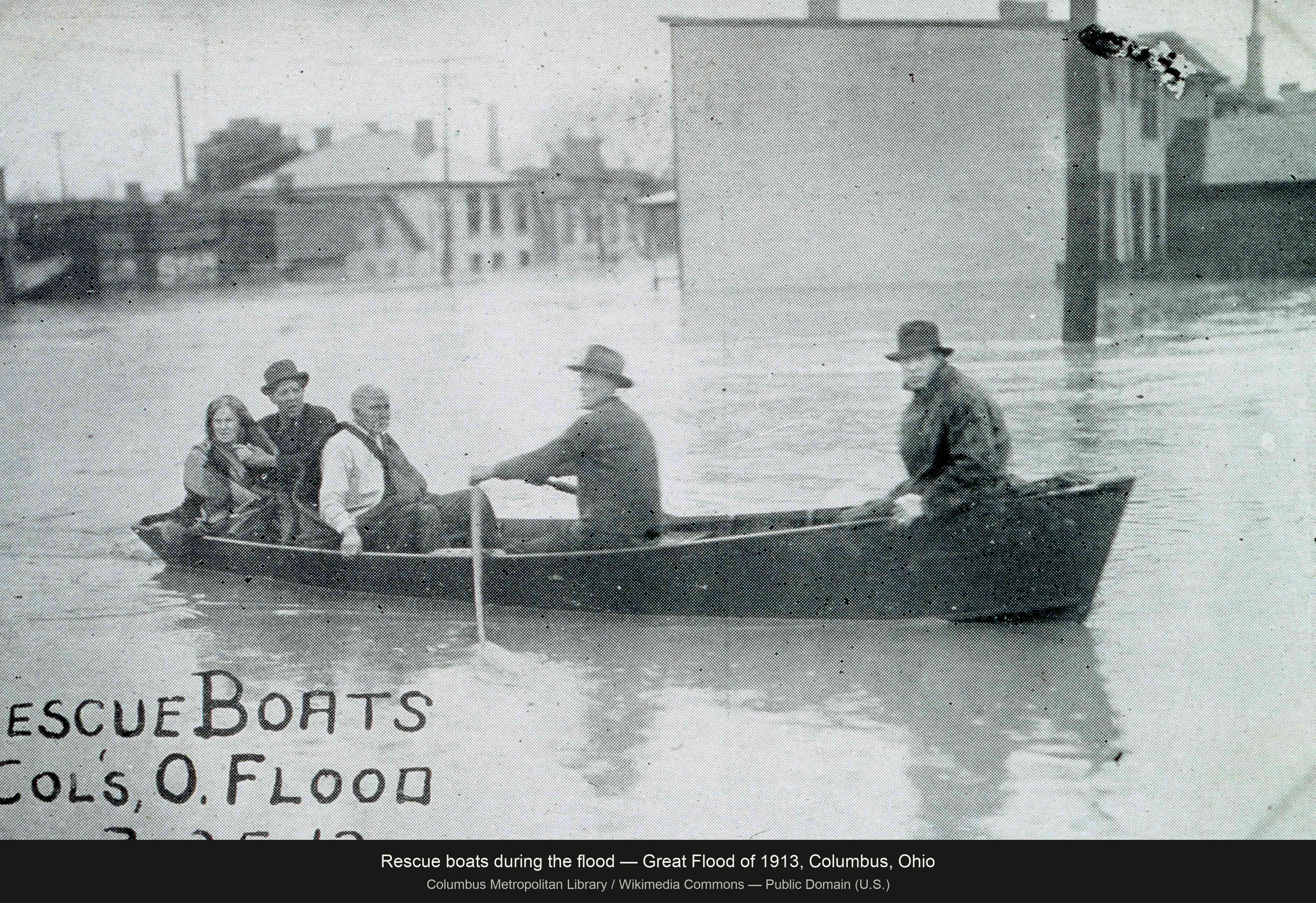 The most damaging aspect of an ice storm is the extreme weight of the accumulated ice. Just a quarter-inch of ice can add hundreds of pounds of pressure to power lines and trees, causing massive infrastructure collapse, long-term power outages, and dangerous travel. In Athens, one of the greatest loss of lives came when an ice-encrusted rescue boat capsized and spilled its families into the rushing waters.
Men Hanging From Trees
It was during this nightmare scenario that Herbert Akerberg, age 15, tuned up and began broadcasting an SOS to anyone who could read him. Akerberg and his family lived in the Hilltop neighborhood which had total rainfall of over 11 inches in those few days. Herbert had a home-built spark gap station that he had constructed out of fascination with the new technology. His antenna was a long, copper wire that he and his dad had strung across a few large Oaks on their property. It was one of only two stations in Columbus at the time (before call letters were required.)
His first message was "SOS Hilltop Business Men’s Association wants to send boats. Supplies will last until about tomorrow. Men are hanging on trees. Send Supplies. Try and get us water and gas. People are suffering. Send this to Mayor Karb at once. SOS” The most remarkable thing was that this lad stayed on the air for nearly 72 hours straight, broadcasting the news of the flood as it came to him. He even ventured forth into the flooded areas to gather information, messages and stories to use while connecting the hard-hit emergency services in the area with the many West Side neighborhoods that were literally under water. His use of the radio for this purpose was the first time the public had seen radio in this capacity . . . and it was celebrated. There were others, of course, on the other end of that wireless who helped direct the emergency coordination, and those included amateur operators in Ann Arbor, Michigan, and at Ohio State University as well as locations across multiple states.
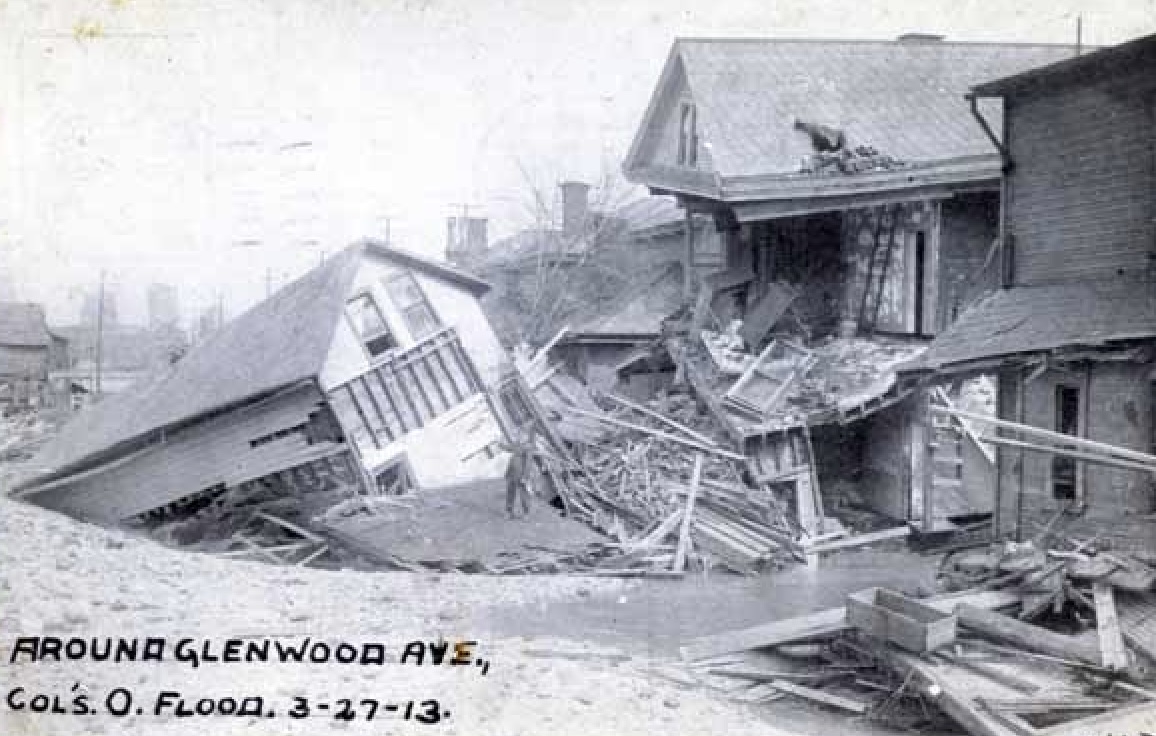
Herbert reported that homes on the West Side had set up planks from second-story to second-story so that people could move from home to home and escape the flooded sections. Because his home had lost all power, station operation relied on several heavy, lead-acid batteries that provided the direct current necessary to juice his induction coil without relying on dead city power lines.
It was an impressive outing for a teen with a small home-built radio, a Morse key, and a pair of headphones. While there were operators working their radios from outside the flood zone who had a hand in this first example of emergency communications, this 15-yr old is remembered because he was actually inside the flooded area.
Akerberg After the Flood
The impact that this experience had on Herbert Akerberg was life-changing, as he stayed in radio for the rest of his life. After graduating from West High School he joined the Army Signal Corps during WWI. After the war, Akerberg came back to Columbus to join Arthur Loeb and Oscar Avery who had a business selling radios to their central Ohio customers. The three decided to start Columbus' first radio station, WPAL (which later transitioned into station WTVN). Akerberg was the "radio magician" who set up the station and got it on the air. After several years at that first station in Columbus, Herbert joined up with CBS and began helping others set up their stations and become CBS affiliates.
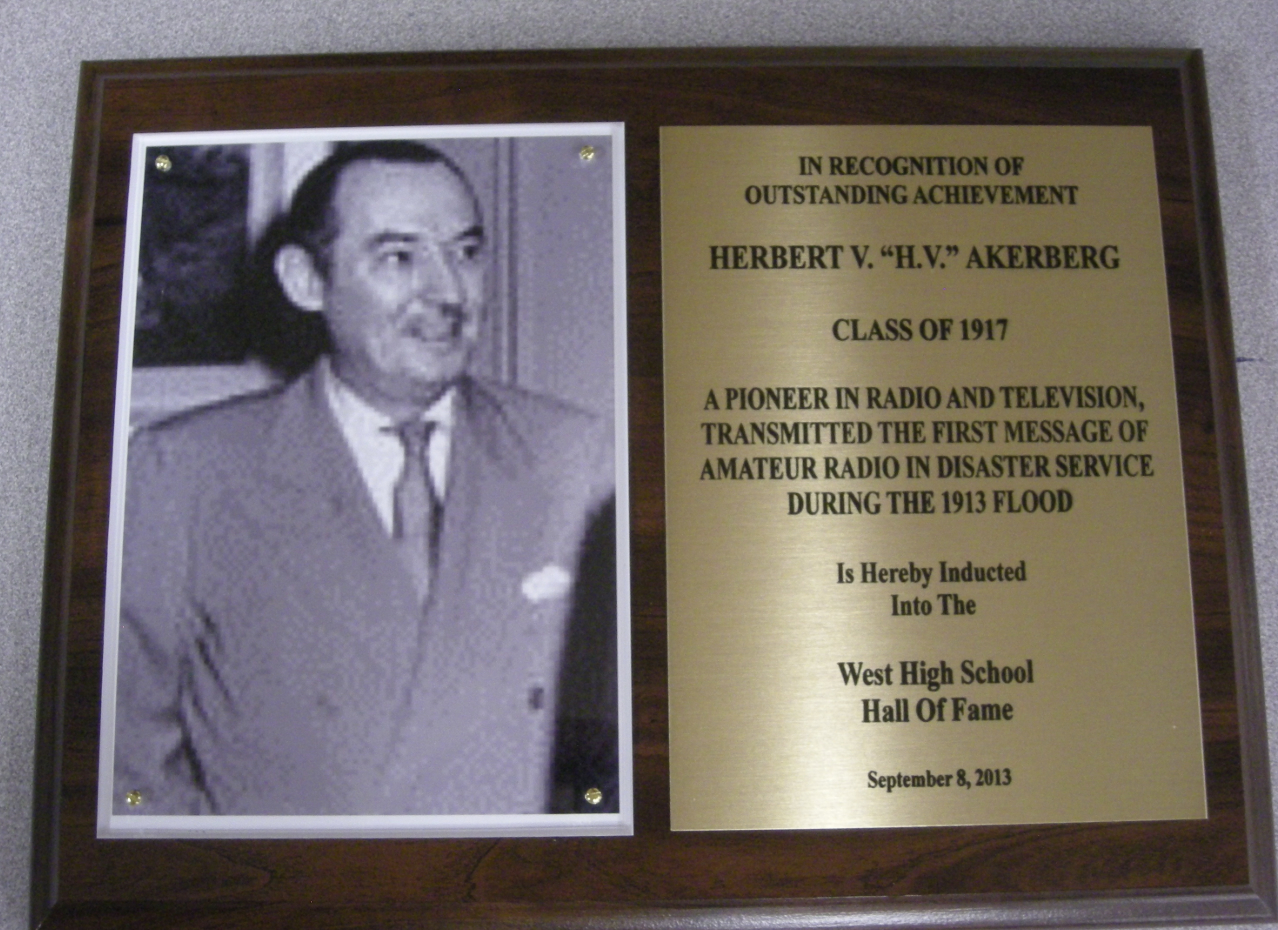 During his days at CBS, Akerberg also became an inventor, patenting designs for mixing boards that would prove to be critical to station operations. When he retired, he moved to Scottsdale, Arizona (my location as well) where he became a silent key in 1964. It's great that the ARRL has chosen to celebrate his life and achievements. . . it shows us what amateur radio can do as a partner in emergency communications. If you're involved with ARES, you should be proud to carry on the tradition!
73s for now,
Dave, W7DGJ