


to QRZ
Latest Awards




Trials & Errors #82 7/23/26: Marius LaTour and the Effects of Quiet Competence
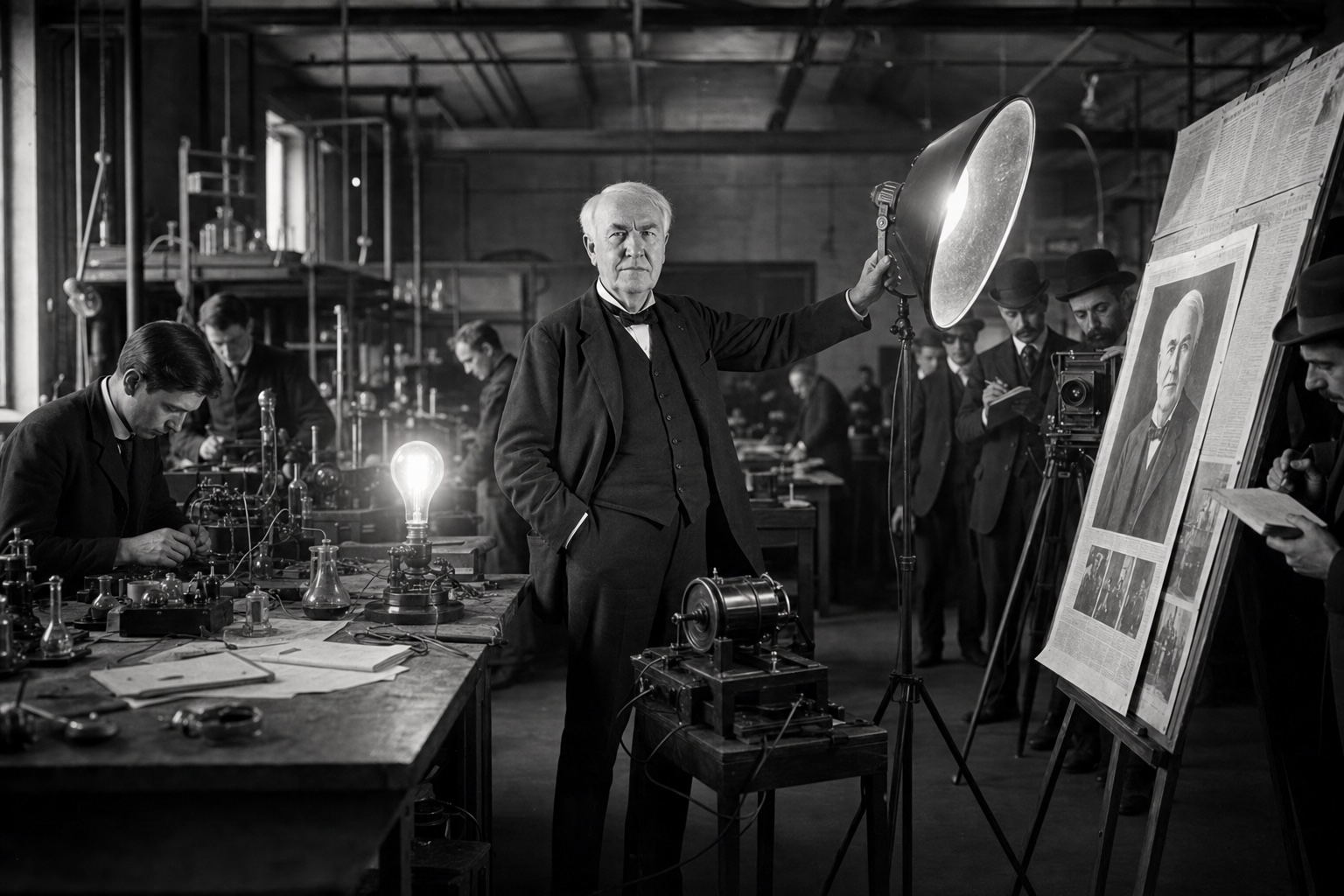
This column derives from my love of innovation. I've mentioned this before and I'll say it again . . . we are our fathers' sons in many ways. I was raised by a man who spent a great deal of time studying Thomas Edison, whom he admired. Dad managed an R&D facility for General Electric, a firm founded by Edison and which had a significant series of early radio achievements.
I personally find a lot lacking in Edison, as in our time we have discovered a great deal about his interests in suppressing the work of others. But there was one thing that was very important to him, and that was self-promotion. If you look at the inventors of his day or ours, some stand out for their ability to get the attention of the press and the public. Does that make them better inventors? Not at all. It's just one distinguishing characteristic. While some inventors made a lot of noise and got great publicity as Edison did, others quietly put in time on their workbench and contributed to our lives without the fanfare.
 "Self promotion" is something we can spot all around us if we look for it. There's your work colleague who wants to announce each and every success with a company memo. Or, the fellow amateur radio operator who makes darn sure that the club publishes his latest radio sports exploits. While there is indeed a subtle art of self-promotion that can help a person make headway in their career or hobby, it is not the inflated ego that makes the grade. Instead, it's just ensuring that key people know about your progress in whatever project you are working on.
Pure science, or engineering, has plenty of those who have been "nose to the grindstone" -- who have been what I'd call "quietly competent." As a headhunter for years, I had to seek them out for my R&D clients and they were not easy to find. It's the self-promoter who first comes to the headhunter's attention -- you have to dig to find the others. In writing this week's column, I had to research more than usual because i wanted to write about one such quietly competent inventor, a man who contributed a great deal during our early radio years.
But this fellow has proven to be almost completely missing in action.
 Not in Wikipedia?
I'm a contributor to Wikipedia, and I hope you are too. But in all the time I've been writing this column, I have never run into a situation where the person I am writing about is not present in that great online resource. How odd, I thought! This guy came up with many significant inventions to improve radio in its early years and in fact has had a lasting impact on radio technology. Why would he NOT be in Wikipedia? Well, I'll tell you why not . . . while his inventions were important, it's because he was quietly competent and completely oblivous to the importance of drumming up promotion. In fact, his name may be slowly getting lost in history.
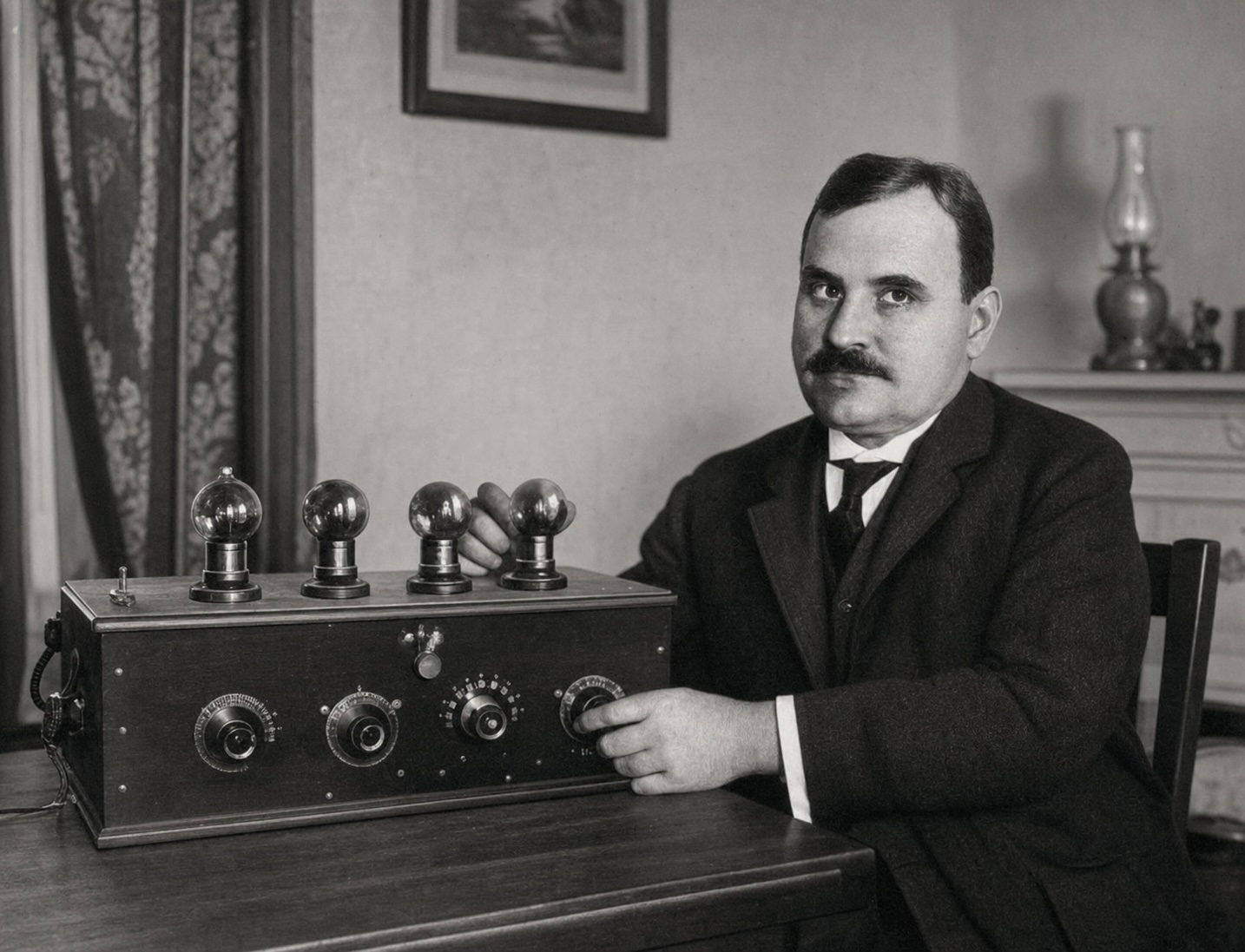
The inventor I'm talking about here is Marius C. A. LaTour, a creative genius if there ever was one. Not only did LaTour make a number of significant advances in radio, he was a generally brilliant guy whose interests crossed over into many other geophysical disciplines. I have been interested in LaTour because, for a time, he was an engineer and later the head of radio R&D for the General Electric corporation (1901-1911). The photo above is restored from the original in Radio News of June, 1925.
Marius LaTour's Contributions
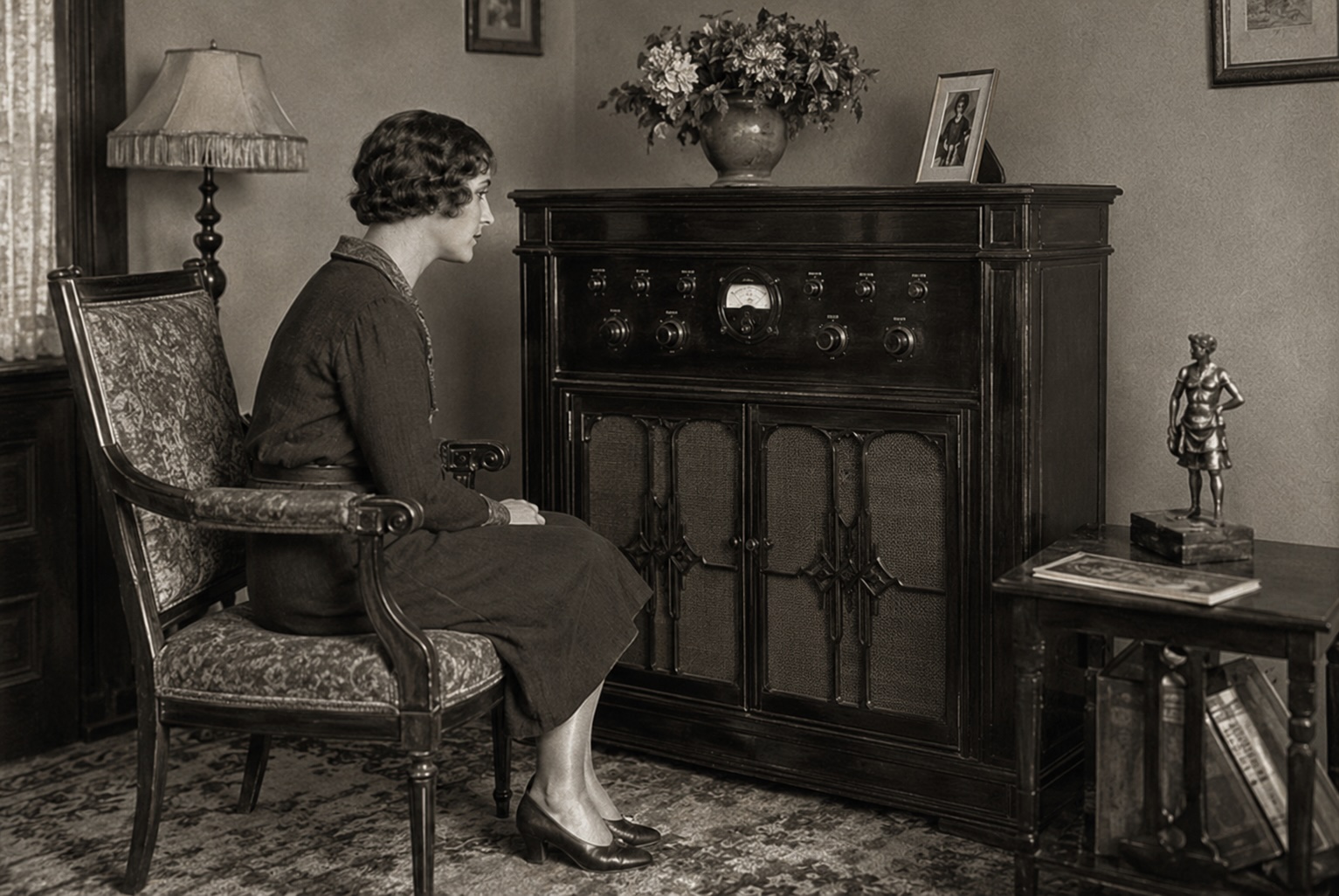
Prior to 1916, radios were plagued with screetching and howling sounds due to the oscillations that stemmed from their designs. (Early multi-stage vacuum tube radios suffered from parasitic feedback, and amplification through multiple stages increased the audibility to the point of huge distraction.) LaTour worked on this problem of radio reception over his years at General Elextric, and earned a good living from his name on a few GE patents. But it was his later 18 claims in a "foundational" patent [#1,584,701] that really brought his name forward to those companies marketing radios. If you are not familiar with that term, a foundational patent is a broad intellectual property claim covering the core technology of an emerging field. A person who holds a foundational patent has likely established the building blocks for subsequent innovation, much like the original Stanford patent that allowed Google and the search industry to develop.
Marius LaTour had something of great value with his 18 claims improving radio reception. He had no clue, however, that while he was in France during WWI there was an absolute rush to build radios back in the USA. Most of those American companies had "borrowed" the technology they'd seen in the French L-type radio design which came directly from LaTour's work. It allowed for clear, reliable high-amplification radios. When his designs were given USA patents, they were allowed based on the date of his first French application (Oct. 2, 1916). This meant that tens of thousands of sets had been built that violated very secure and transformative patents . . . he would be due $1 million or more in royalties. Marius had licensed AT&T as well as RCA to use his patents, but there were dozens of other manufacturers who had skirted what they thought might be unnecessary payments.
But Marius LaTour was not the kind of man who was comfortable going on the attack. In fact, he had done that already with Hazeltine, another radio manufacturer who had refused to pay up. They lost to LaTour, whose patents were reinforced by the courts, putting him in an even better position to continue rolling through the many other brands on the market. Instead, he chose to find another way around the problem -- one that he knew would pay him far less in the end, but which might solve the problem in one fell swoop. He approached his previous foe, Hazeltine Corporation (which later became a part of Emerson Electric) with a deal for Hazeltine to acquire all rights to his patents. LaTour then forgave all the intrusions from other manufacturers in the past, in a move rarely seen by someone in a position of strength.
 "I confess that the existence of this patent monopoly came as quite a shock to me, as I realized that our distributers and dealers might be made the subjects of litigation by the inventor," stated the CEO of a major offending radio supplier in a NY Times article of the day. "It is rather uncomfortable for a distributer or a dealer to contemplate losing all the profits he has made as damages are pursued by the inventor. But all past infringements both on our part and on the part of our distributers and dealers have been waived by Mr. Latour."
One thing that all of our big name innovators had in common over the years was a very active slate of lawsuits and patent filings. I've written in earlier columns about the legal exploits of several of these. Edison had a huge team of lawyers on his payroll, and on the radio side, so did Marconi. Others, like Edwin Armstrong or Nikola Tesla, relied on one or two lawyers. These fellows sometimes went through years of legal battles (In Armstrong's case, with his wife continuing on after his passing). Those legal battles helped to position them with journalists as someone truly important in their area of expertise. But in LaTour's case, he proved to have the personality that could forgive and forget.
To me, this reflects another aspect of the person with a "quiet" competence. He came to visit the USA and discovered that there were significant dollars due him for the use of his patented technologies from radio manufacturers of the day. While he went after Hazeltine with all he could muster, and won, he was a big man to forgive the intrusions of the radio industry and instead work out a solution with his previous adversary.
Perhaps if Marius LaTour had gone after each and every manufacturer over the years, the resulting press would have ensured he'd be listed in Wikipedia. One side effect of being "quietly competent" may be that you miss the acclaim afforded to others who take a more aggressive approach in protecting what is theirs.
Dave, W7DGJ